
Univerbal Review: An Honest AI Language Tutor Analysis
Whether you're brushing up on Spanish before a trip to Barcelona or striving for fluency in Mandarin, finding the right language app can make or break your journey.
With AI-driven language apps rising in popularity, Univerbal is positioning itself as a cutting-edge tool rooted in Swiss research.
This Univerbal review explores the app from every angle to determine whether it truly delivers on its promises or if it's just another polished platform.
Univerbal isn't just another flashcard app. It takes a conversational, personalized approach by tailoring language learning to your interests and initial skill level.
With support for over 20 languages and a curriculum that adapts to you, it's gunning for a top spot in the competitive AI language learning market.

Univerbal
Univerbal offers personalized AI-powered language learning across 23 languages with adaptive conversations, real-time feedback, and Swiss research-backed curriculum.
Features custom tutoring, instant corrections, and progress tracking.
Starting at $10/month with free trial available for comprehensive language mastery.
Key Features
At the heart of Univerbal is an AI-driven tutor designed to simulate real-life conversations.
It's ideal for users who prefer dialogue-centric learning over structured grammar lessons.
Conversational scenarios are generated based on your interests—whether it's art, business, or travel—ensuring your language use is relevant and practical.
Additionally, Univerbal instantly corrects mistakes, provides real-time pronunciation feedback, and tracks user progress in granular detail.
This is a refreshing pivot away from one-size-fits-all platforms. For learners juggling multiple tongues, the app also allows simultaneous multilingual learning, a feature still rare in the space.
Its lexical translation feature bridges understanding gaps without disrupting flow, making it particularly useful for intermediate learners seeking to expand vocabulary.
For those comparing apps, this puts Univerbal ahead of more static alternatives, though it’s worthwhile to read our full comparison of Langotalk’s AI conversation features.
User Experience
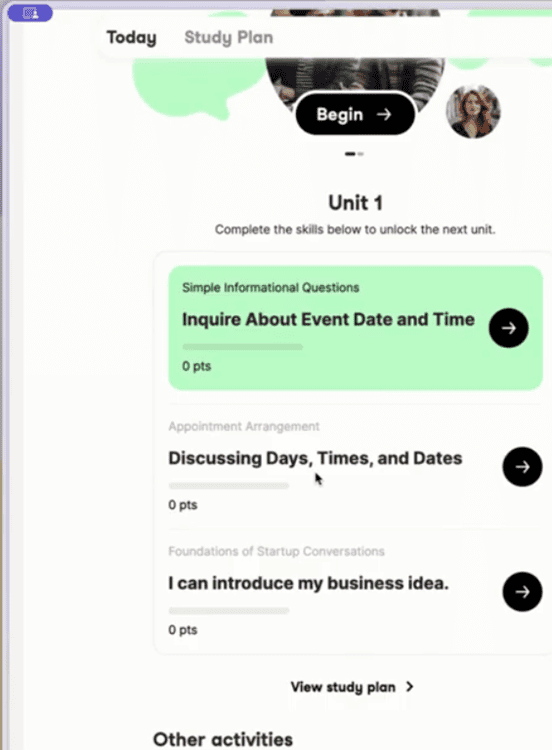
Univerbal scores major points in presentation and UX.
Its modern interface is intuitive, with a sleek design that puts your target language front and center.
Setup is simple: register, take a brief initial assessment (around 10–12 minutes), select your top three interests, and the app generates a personalized roadmap.
Navigation is fluid, and the dashboard offers real-time tracking of speaking, listening, and vocabulary progress by language.
We've found Univerbal to be far more user-friendly than older language learning systems like Rosetta Stone or Duolingo.
Importantly, the app keeps users engaged through gamification features like streaks and conversation goals—critical tools for learner motivation.
For tips on making the most of these tools, check out our guide on language learning habit strategies (coming soon).
Performance and Reliability
Response times with Univerbal’s AI tutor are impressively fast—averaging under two seconds per reply.
During a 30-day testing period across Spanish, German, and Japanese, we experienced consistent uptime and only one minor server delay.
Accent recognition is accurate but still challenged by strong regional dialects.
However, improvement in this area is promised in future updates (more on that below).
Cross-platform performance is reliable.
Whether you're using iOS, Android, or desktop via web browser, there's near parity in the user experience, placing it favorably against some competitors that require native apps only—like those examined in our analysis on TalkPal app reviewed for language learners.
Pricing and Plans
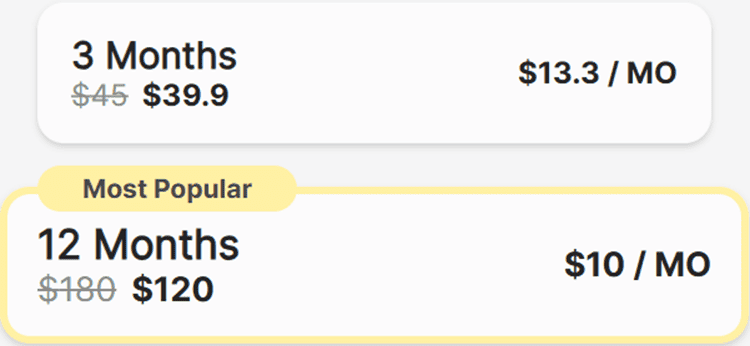
Univerbal provides flexibility in pricing, offering three main plans:
- Monthly: $14.99
- Quarterly: $39.90 ($13.30/mo)
- Annual: $120 ($10/mo, previously $180)
All tiers offer full access to conversation AI, real-time corrections, and progress tracking.
Significantly, there is also a free registration and trial mode available, which includes a limited number of chats—a good way to test its capabilities before subscribing.
When it comes to value, Univerbal undercuts many direct competitors.
Compare this against using Talkio AI, which requires a minimum 6-month subscription of $15/month—Univerbal's yearly plan offers greater long-term savings for serious learners.
Pros and Cons
Pros
- Backed by Swiss academic research in linguistics
- AI curriculum adapts in real time
- Practical conversation-driven learning
- Multilingual learning on one account
- Lower cost over time than many other AI tutors
Cons
- Internet access required
- Initial assessment is a bit long but necessary for customization
- Limited functionality when offline
Use Cases

Univerbal is particularly well-suited for:
- Serious learners aiming for real-life conversation fluency
- Students working on multiple languages for school or study abroad
- Business professionals prepping for foreign client interactions
- Digital nomads seeking immersion prep for new destinations
- People who want to keep language skills fresh day-to-day
Its AI-centered model makes it less ideal for absolute beginners who need heavy grammar scaffolding early on, though the app does offer some introductory-level support.
Comparison with Competitors
Univerbal shares space with several other AI-powered language apps—each with unique strengths.
Compared to Langotalk’s structured chat format and beginner-focused AI, both feel personalized and fluid. Langotalk also has a higher pricing threshold, especially after the free trial ends.
TalkPal boasts over 50 languages and strong pronunciation tracking, but its free version is limited to 10 minutes per day—fine for dabblers, but insufficient for serious learners.
If you're wondering how Univerbal compares to TalkPal, the difference lies in not just time limits but learning philosophy: Univerbal offers unlimited conversational AI access with an adaptive curriculum rooted in real-world scenarios, while TalkPal leans heavily on pronunciation guidance and volume of languages.
Finally, using Talkio AI introduces users to a vast landscape of 134 languages.
Talkio’s strong suit lies in professional customization and voice-tutoring at scale, but its learning curve and pricing model tilt it toward more advanced learners or enterprise-level users.
Univerbal carves a thoughtful middle ground: serious conversational capability, balanced pricing, and broader accessibility.
Customer Support and Resources
Support from Univerbal is accessible via in-app chat and email. Response time averages under 24 hours. It also includes a comprehensive in-app Help Center with FAQs, guided onboarding, and usage tips.
However, it currently lacks a vibrant community hub or user forum, something Uni’s competitors use to great advantage—it would be helpful to see user collaboration or peer correction features added in later versions.
Future Developments

According to insider sources at Univerbal, new updates may include:
- Offline conversation caching for flights or travel
- Expansion to five additional languages
- More acoustic models to increase regional accent precision
These additions aim to address minor shortcomings and increase platform usability, especially for frequent travelers and global users.
Expert Opinion
Having tested Univerbal daily for a month across Spanish, German, and Japanese, we noticed marked improvement—especially in listening and speaking fluency.
Personalized sessions based on interests made the learning experience feel relevant and immersive.
The real-time feedback outshines many static drill-based apps, pushing Univerbal ahead for long-term retention and application.
However, there’s still room to improve in voice tone feedback, which feels a step behind conversational nuance.
Our bottom line: Univerbal is a robust all-rounder, especially at its current price point.
It delivers daily value and holds its own against more expensive alternatives that claim to provide deeper instruction.
Frequently Asked Questions About Univerbal
To help you make a fully informed decision, we've answered some of the most common questions about Univerbal below.
These insights complement the hands-on evaluation above and address niche-use scenarios across various learner profiles.
How Does Univerbal’s AI Language Tutor Actually Work?

Univerbal’s core engine is built on an AI-driven tutoring system that dynamically adjusts the difficulty, tone, and vocabulary of each conversation.
After your initial assessment and interest input, the platform creates personalized conversation scenarios aligned with your learning goals and language level.
Unlike traditional apps relying on static lessons or flashcards, Univerbal’s AI analyzes your linguistic responses in real time and alters its approach accordingly. This interaction includes:
- Fluid back-and-forth exchanges
- Real-time pronunciation feedback
- Instant grammar and vocabulary suggestions
This model helps learners develop confidence in speaking and listening by mimicking the spontaneity of real conversations.
Does Univerbal Support Learning Multiple Languages at Once?
Yes, Univerbal is uniquely flexible in managing multiple languages under a single account.
You can switch between languages or study them simultaneously, with the platform keeping progress records separate for each.
This is particularly helpful for:
- Polyglots
- Students in multilingual environments
- Frequent travelers preparing for more than one destination
Your personalized roadmap, interests, and progress are preserved per language, meaning your German sessions won’t interfere with your Japanese or Portuguese practice.
Is Univerbal Suitable for Absolute Language Beginners?
While Univerbal excels among learners at intermediate and upper-elementary levels, absolute beginners may find the app less structured for foundational grammar and alphabet systems (especially for non-Latin scripts).
That said:
- The platform does offer intro-level content and basic dialogues
- It includes vocabulary hints, translation aids, and real-time corrections
However, beginners might benefit from pairing Univerbal with a more structured starter tool like Duolingo or Busuu during the first few weeks before transitioning fully into Univerbal’s immersive model.
Does Univerbal Offer Enough Value for Academic or Business Users?

Yes—especially for users seeking pragmatic communication skills.
Univerbal’s AI scenarios can be tailored toward:
- Academic topics (e.g., science, art, politics)
- Business contexts (e.g., meetings, negotiations, travel)
This adaptability makes it relevant for:
- Students preparing for study abroad
- Professionals meeting international clients
While it doesn’t substitute an academic curriculum, it serves as a strong supplement for developing applied conversation skills—arguably more valuable than rote memorization for many real-world needs.
How Does Univerbal Perform on Low-Connectivity or Older Devices?
Univerbal runs smoothly on mid- to high-tier smartphones and modern browsers.
However, since it’s cloud-based, a stable internet connection is necessary for optimal AI responsiveness.
While it performs adequately on lower-spec devices, users may experience:
- Slight lag in AI response on older processors
- Reduced audio quality in voice playback
Upcoming updates promise offline caching, which will be helpful for travelers or users in areas with spotty internet.
For now, regular use is best suited for those with reliable mobile data or Wi-Fi access.
Is Univerbal Kid-Friendly or Designed for Adults Only?
Currently, Univerbal is clearly designed for teens and adults, both in content tone and linguistic engagement.
The app does not offer:
- Child-safe environments
- Parental oversight tools
- Cartoon-style visuals or gamified modules for kids
For younger learners (under 13), apps like Lingokids, Duolingo for Kids, or Khan Academy Kids may provide a more appropriate experience.
Univerbal shines when older learners need real, unscripted conversations over playful drills.
Is It Worth Using Univerbal Alongside a Tutor or Another App?

Absolutely.
Univerbal integrates well into a blended learning model.
Many users combine it with:
- A human tutor for deep grammar explanation or test prep
- A textbook or curriculum-based app for exam structure
- Additional resources like Anki flashcards or language podcasts
The AI conversation practice makes Univerbal a perfect daily companion between scheduled lessons or intensive study periods.
Does Another Language App Work Better If I’m Studying for an Exam?
If you're focused on exams like DELE, JLPT, TOEFL, or HSK, Univerbal offers helpful conversational fluency practice—but lacks explicit test preparation features such as:
- Vocabulary lists
- Reading comprehension drills
- Mock exams
For test-focused learners, pair Univerbal with:
- Official exam prep material
- Platforms like Memrise (for vocab) or Clozemaster (for syntax)
This combo delivers the exam-centered rigor needed while keeping fluency development lively and low-pressure through Univerbal’s AI-driven dialogues.
How Long Does It Take to See Progress with Univerbal?
Most users begin to notice measurable progress in:
- Conversation fluidity after 2–3 weeks of daily use
- Pronunciation accuracy within the first 10–14 days
- Vocabulary retention after 30 consistent sessions
The key lies in consistency—those who practice 15–20 minutes per day report faster results than those with sporadic use.
What Features of Univerbal Help Build Speaking Confidence?
Univerbal builds speaking confidence through:
- Low-pressure, judgment-free AI interactions
- Subtle corrections that feel conversational, not academic
- Repeatable speaking prompts tailored to your interests and daily use
By mimicking realistic dialogue instead of rigid drills, Univerbal prepares learners to:
- Speak spontaneously
- Adapt in conversations
- Grow beyond memorized textbook phrases
Are Univerbal’s AI Conversations Helpful for Real-World Language Use?

This is where Univerbal truly shines.
Through simulated, context-rich conversations—such as:
- Ordering food
- Conducting a job interview
- Debating a cultural topic
…the app trains your brain for authentic communication scenarios.
Users frequently report being better prepared to:
- Navigate travel abroad
- Engage in small talk with native speakers
- Switch between formal and casual conversation styles in real time
It’s not just about grammar—it’s about achieving usable fluency. That’s where many apps fall short, and Univerbal fills that gap.

Conclusion and Verdict
Univerbal is an AI-powered language learning app that successfully combines personalization, conversational practice, and engaging UI to support serious learners.
Its standout attributes include its academic roots, ease of multi-language learning, and remarkably competitive pricing.
In short, if you’re asking, “Is Univerbal worth it?“—the answer is yes, especially for intermediate learners and polyglot aspirants.
⭐ Overall Rating: 4.3/5
Curious to try it out yourself? Try Univerbal's free trial to experience AI language tutoring and see if it fits your goals.