5 Best Language Learning Apps for Intermediate Learners — Ranked & Reviewed
If you’re stuck in the frustrating middle of language learning, you’re not imagining it.
The intermediate plateau is real: you can order coffee, follow basic conversations, and maybe even read simple articles, but spontaneous speaking still feels slow, grammar mistakes keep repeating, and beginner apps suddenly feel too easy to be useful.
That’s exactly why this guide exists.
After reviewing five major platforms at Spanish B1 and French B2 levels, we found that the best language learning apps for intermediate learners are not necessarily the most popular ones, but the ones that actually help you move from “I know a lot” to “I can use it well.”
This roundup cuts through the noise and shows you which app fits your goals, budget, and learning style, whether you want more speaking confidence, cleaner grammar, or a clearer path to B2 and beyond.
What Is the Best Language Learning App for Intermediate Learners?
Here are our team's top picks for the best language learning app for intermediate learners:
| Quick Pick | App | Why |
|---|---|---|
| 🏆 Best Overall for Speaking Practice | Langotalk | AI voice conversations plus real-time error correction |
| 🤖 Best AI-Powered Experience | TalkPal AI | GPT-powered roleplay across 57+ languages |
| 🗣️ Best for Pronunciation & Dialect Practice | Talkio | 70 languages and 122 dialects with word-level pronunciation feedback |
| 📚 Best Structured Curriculum | Busuu | CEFR-aligned B1/B2 progression and native-speaker feedback |
| ✏️ Best for Grammar-Focused Learners | Babbel | Expert-designed lessons with strong research backing |
| 💰 Best Budget Pick | Busuu | Lowest annual price in this roundup |
| 🔬 Best Free Trial | TalkPal AI | 14-day trial with no payment required |
The full reviews below explain where each app shines, where it falls short, and who should skip it.
The 5 Best Language Learning Apps for Intermediate Learners Compared
1. Langotalk
Best for Breaking the Intermediate Speaking Plateau.
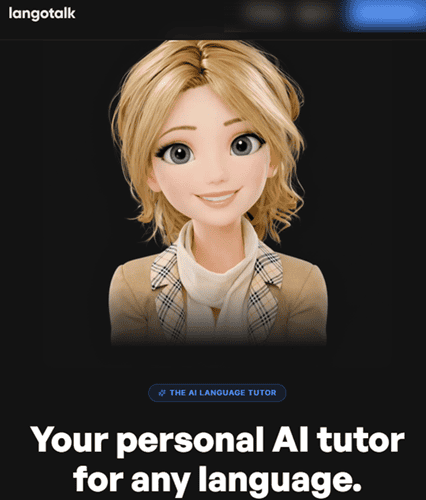
Langotalk is built around one simple idea: you get better at speaking by speaking a lot, not by endlessly reviewing vocabulary lists.
That makes it especially appealing if you’re at the stage where you understand quite a bit but still freeze in live conversation.
With more than 500,000 users, it has positioned itself as an AI-first fluency tool rather than a traditional course app.
Key Features:
- AI tutors with voice and text chat across 20+ languages
- Call Mode for faster-response, phone-style speaking practice
- Real-time correction with explanations, not just red marks
- Personalized lessons generated from your mistake patterns
- Vocabulary decks, stories, and comprehension tools included
User Experience:
The user experience is smooth and low-friction.
It’s available on web, iOS, and Android, and the app feels designed for short but frequent sessions.
That matters because intermediate learners usually benefit more from daily activation than from occasional marathon study blocks.
We also liked how easy it was to switch between languages, making it a strong candidate for an app that lets you learn different languages at once.
Pricing:
7-day free trial; $29.99 monthly, $79.99 annually ($6.67/month), or $149.99 lifetime.
It also offers a 3-month money-back guarantee on website purchases, which is unusually generous and worth noting if you’re interested in language learning platforms that offer lifetime subscriptions.
Pros:
- Excellent for spontaneous speaking confidence
- Strong AI feedback and personalization
- Multi-language access under one account
- Lifetime plan is competitively priced
Cons:
- Smaller language catalog than TalkPal or Talkio
Best For:
Intermediate learners who “know enough” but struggle to speak fluidly in real time.
Expert Opinion:
Langotalk is one of the strongest tools here for turning passive language knowledge into active conversation.
It won’t replace a formal curriculum if you need structured B1/B2 progression, but for breaking speaking hesitation, it’s one of the most compelling options in this roundup.
Get started with Langotalk.
2. TalkPal AI
Best for AI-Powered Immersive Conversation Practice.
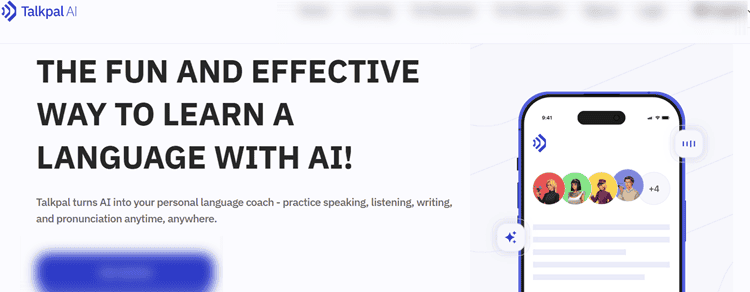
TalkPal AI feels like the most flexible conversational app in this list.
It leans heavily into GPT-powered interaction, which means the conversations are more open-ended and less scripted than what you get in many traditional lesson-based platforms.
For intermediate learners who want variety, improvisation, and wider language support, that’s a real advantage.
Key Features:
- GPT-powered text and voice conversations
- Roleplays, debates, and character modes
- 300+ learning experiences tailored to goals and level
- Pronunciation assessment on every audio message
- Supports 57+ languages with a free basic plan
User Experience:
Using TalkPal is intuitive, and the app quickly gets you into real interaction instead of funneling you through set lesson sequences.
That’s great if you’re bored with repetitive beginner-style content and want more dynamic speaking exposure.
It’s also one of the safer options for cautious buyers because the 14-day free trial does not require payment upfront.
For learners exploring rarer languages or juggling several at once, it competes well with our apps for Japanese learners and multilingual-learning recommendations.
Pricing:
Free basic tier with 10 minutes per day; Premium is $14.99 monthly or $6.25/month on the 24-month plan.
All premium plans come with a 14-day free trial and no initial payment requirement.
Pros:
- Excellent AI immersion and conversation variety
- Massive language range
- Strong value on long-term plan
- Risk-free trial setup
Cons:
- Free plan is very limited
Best For:
Learners who want adaptive AI conversation practice more than a formal curriculum.
Expert Opinion:
TalkPal AI is one of the best choices for intermediate learners who want to push beyond scripted dialogues and into realistic, unpredictable interaction.
It’s less ideal if you need explicit grammar scaffolding, but it excels at immersive practice.
Get started with TalkPal AI.
3. Talkio
Best for Pronunciation and Dialect-Specific Speaking Practice.
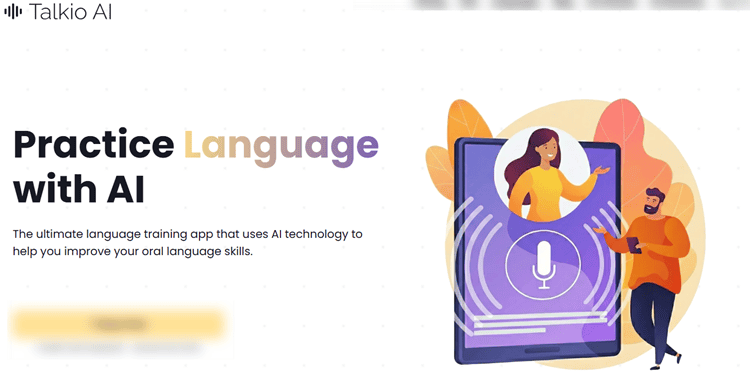
Talkio AI is the most specialized app in this roundup, and that specialization is exactly what makes it interesting.
Instead of trying to be everything for everyone, it focuses on oral development, pronunciation, and dialect-specific speaking practice.
If accent accuracy and regional variation matter to you, Talkio stands apart.
Key Features:
- Voice conversations with 400+ AI tutors
- Word-by-word pronunciation feedback
- Access to 70 languages and 122 dialects
- Weekly progress reports and streaks
- Crosstalk mode, wordbook, and instant translations
User Experience:
The platform is browser-based as a progressive web app rather than a traditional app-store app, which may feel slightly less polished for some users.
Still, the core speaking experience is strong, and the pronunciation analysis is more granular than what we saw in the other apps.
That makes Talkio especially relevant if you care about specific regional varieties.
Pricing:
$15/month on the 6-month plan or $10/month annually.
There’s a 7-day free trial, but a credit card is required.
Pros:
- Best-in-class pronunciation detail
- Huge dialect and language coverage
- Strong oral-skill progress tracking
- Useful for schools and teams too
Cons:
- Trial requires payment details upfront
Best For:
Intermediate learners who want to sound better, not just speak more.
Expert Opinion:
Talkio is the strongest niche pick in this roundup.
If your biggest frustration is accent, oral precision, or dialect targeting, it may be the smartest investment—even if it’s not the cheapest.
Get started with Talkio AI.
4. Busuu
Best for Structured B1–B2 Progression.

Busuu is the most curriculum-driven option here, and for many intermediate learners, that’s exactly what makes it so effective.
Some people don’t need more open-ended AI conversation; they need a clear roadmap, properly sequenced lessons, and confirmation that they’re actually covering B1 and B2 material instead of guessing.
Busuu delivers that structure better than any other app in this group.
Key Features:
- CEFR-aligned courses from A1 to C1
- Clear B1/B2 pathways for intermediate learners
- Native-speaker community feedback
- AI-powered study plans and grammar review
- Live lessons available for added speaking practice
User Experience:
Busuu’s interface is polished, simple, and easy to stick with.
The short lessons make it practical for busy adults, while the native-speaker feedback adds a human element missing from most AI-first tools.
It’s also one of the strongest recommendations for professionals and for anyone seeking foreign language learning apps for students with more educational scaffolding.
Pricing:
$12.99 monthly, $55.99 for 6 months ($9.33/month), or $72.99 annually ($6.08/month).
All plans include a 14-day money-back guarantee.
Pros:
- Best structured path for B1/B2 learners
- Human feedback from the community
- Excellent annual value
- Strong accountability and progress visibility
Cons:
- Less AI-adaptive than newer rivals
Best For:
Intermediate learners who want guided progression, accountability, and formal CEFR alignment.
Expert Opinion:
Busuu is the safest overall recommendation for learners who want structure over novelty.
If you’ve been stuck because your study feels random, Busuu offers the clearest path forward.
Get started with Busuu.
5. Babbel
Best for Grammar Refinement with Expert-Led Lessons.

Babbel remains one of the most credible names in language-learning apps because it combines practical lesson design with unusually strong academic validation.
For intermediate learners who feel their grammar is shaky, or who want cleaner sentence construction rather than more free-form chatting, Babbel still does an excellent job.
Key Features:
- Courses created by 200+ experts and linguists
- Intermediate and advanced course tracks
- AI-enhanced speech recognition
- Everyday Conversations for practical speaking
- Podcasts, videos, and magazine-style content included
User Experience:
The user experience is polished and predictable in a good way.
Babbel’s 15-minute lesson format makes it easy to maintain consistency, and the grammar explanations are clearer than what many competitors provide.
Pricing:
$14.95 monthly, $12.65/month for 3 months, $11.15/month for 6 months, and $7.45/month annually.
Free accounts can unlock up to 80 lessons depending on the language.
Pros:
- Excellent grammar support
- Research-backed effectiveness
- Short, manageable lessons
- Generous free lesson access
Cons:
- Smaller language catalog
- Less adaptive than AI-first rivals
Best For:
Intermediate learners who want more accuracy, better grammar, and expert-led structure.
Expert Opinion:
Babbel is not the flashiest app, but it remains one of the most trustworthy.
If your main problem is not confidence but correctness, Babbel may suit you better than the more conversation-heavy alternatives.
Get started with Babbel.
Which App Is Right for You?
Here’s the simplest way to choose among these five:
| App | Standout Strength | Best Match |
|---|---|---|
| Langotalk | Speaking confidence and fast-response fluency | Learners stuck at the conversational plateau |
| TalkPal AI | Open-ended AI immersion | Learners who want flexible roleplay and many languages |
| Talkio | Pronunciation and dialect depth | Learners focused on accent and oral precision |
| Busuu | CEFR-based structure | Learners who want a guided B1–B2 roadmap |
| Babbel | Grammar refinement | Learners who want expert-designed lessons and stronger accuracy |
If you want the best all-around value for structured intermediate progress, Busuu wins.
If conversational confidence is your biggest pain point, Langotalk is the better fit.
If you care most about AI immersion, TalkPal AI deserves a close look.
How We Chose the Best Apps for Intermediate Learners
Intermediate learners need different tools than beginners.
At B1–B2, the challenge isn’t memorizing your first 500 words anymore.
It’s turning passive knowledge into active fluency without getting bored or stuck.
That’s why we focused this roundup on apps that genuinely serve learners in the middle stage.
Here’s what made the cut:
- Intermediate-specific content paths — clear B1–B2 usefulness, not just beginner drills
- Speaking and conversation practice — voice interaction mattered more than passive listening
- AI-powered personalization — adaptive correction and tailored practice earned extra points
- Pricing transparency — no hidden costs, vague trials, or confusing downgrade rules
- Language availability — especially important for learners outside the usual Spanish/French/German trio
- Progress tracking — visible indicators of improvement over time
- Platform accessibility — mobile and desktop usability both mattered
- User trust signals — user base size, research support, and broader reputation
We looked at daily lesson quality, speaking usefulness, correction accuracy, consistency, and whether the price actually felt justified in real use.
If you’re also comparing options by target language, you may want to browse our language app for Spanish learners guide as a follow-up.
Apps in this roundup range from $6.08/month on Busuu’s annual plan to $29.99/month on Langotalk’s monthly plan, and every app offers some kind of trial, free access, or refund window.
Side-by-Side Comparison — Best Language Apps for Intermediate Learners
To make the pricing fairer, the table below uses annual-plan monthly equivalents whenever possible.
This gives a more realistic comparison for serious learners, since intermediate progress usually requires several months of consistent study.
| Feature | Langotalk | TalkPal AI | Talkio | Busuu | Babbel |
|---|---|---|---|---|---|
| Annual Price/Month | $6.67 | $6.25 | $10.00 | $6.08 | $7.45 |
| Languages Available | 20+ | 57+ | 70 languages & 122 dialects | 14+ | 14+ |
| Speaking Practice | ✅ Voice + Text | ✅ Voice + Text | ✅ Voice-first | ✅ Guided | ✅ Speech recognition |
| Pronunciation Feedback | ✅ | ✅ | ✅ Word-by-word | ✅ | ✅ |
| Progress Tracking | ✅ | ✅ | ✅ Weekly reports | ✅ | ✅ |
| Best For | Speaking plateau | AI immersion | Dialects & accent | Structured B1/B2 | Grammar refinement |
Each app was judged across five areas: speaking quality, AI personalization, curriculum depth, value for money, and intermediate suitability.
Best Daily Speaking Practice for Intermediate Learners Without a Tutor
If you’re wondering how to practice speaking every day without a tutor, the short answer is this: you need high-frequency, low-pressure speaking reps.
At the intermediate level, consistency usually matters more than intensity.
A 15-minute daily routine with the right app often works better than one long session per week, because it keeps your active vocabulary, sentence-building speed, and listening-to-speaking transition sharp.
A practical daily structure looks like this:
- 5 minutes: warm up with a familiar topic
- 5 minutes: do a roleplay or opinion-based speaking task
- 5 minutes: review corrections and repeat improved answers
This is exactly where AI-powered apps can outperform passive study tools.
Langotalk is especially strong here because it was designed around daily speaking activation, not just content consumption.
Its AI tutors, voice and text chat, and Call Mode make it easier to simulate the kind of fast-response speaking that many B1–B2 learners avoid.
The app also tracks your mistakes and turns them into targeted follow-up practice, which is one of the most efficient ways to improve without hiring a private teacher.
TalkPal AI is another good option if you want more open-ended conversation variety, while Talkio is better if your daily focus is specifically pronunciation or dialect accuracy.
But if your main challenge is simply building the habit of speaking every day, Langotalk remains one of the best language learning apps for intermediate learners because the friction to start speaking is so low.
The key is not to wait until you “feel ready” to speak.
At B1 and B2, speaking practice is no longer a reward for studying more grammar. It’s the method that helps everything else become usable.
Best Roleplay Exercises to Build Conversational Fluency at B1–B2
If you already know the grammar but still struggle to sound natural, the missing piece is usually conversational fluency practice, not more rule memorization.
One of the best ways to fix that is through roleplay exercises that force you to retrieve language quickly in realistic situations.
The most effective roleplay exercises for intermediate language learners include:
- Ordering, complaining, or asking for help in everyday service situations
- Small talk and follow-up questions with a coworker, classmate, or neighbor
- Giving opinions on news, travel, work, or culture topics
- Phone-call simulations, where you have less time to prepare your response
- Explaining a problem and responding to clarifying questions
These tasks work because they train the exact skill intermediate learners often lack: spontaneous output under mild pressure.
That’s also why Langotalk’s Call Mode stands out.
It removes some of the pause-and-edit comfort of text-based practice and pushes you toward faster, more natural replies.
TalkPal AI is also excellent for roleplays, debates, and character-based scenarios, especially if you want more variety across 57+ languages.
For learners asking, “What’s the best way to build conversational fluency when you already know the grammar?”, the answer is usually a mix of daily speaking, targeted correction, and repeatable roleplay scenarios.
Grammar gives you the pieces.
Speaking practice teaches you how to use them on time.

Conclusion
The best app for an intermediate learner depends less on hype and more on your actual bottleneck.
If you’re stuck speaking slowly and hesitating, Langotalk is the most targeted fix.
If you want wide language access and dynamic AI practice, TalkPal AI offers the strongest immersive value.
If accent and dialect matter most, Talkio is the specialist pick.
If you need a clear path from B1 to B2, Busuu is the most reliable structured choice.
And if you want expert-led grammar improvement, Babbel remains a smart investment.
The good news is that every app here offers some way to test the experience before committing fully, whether through a free trial, free lessons, or a refund window.
Start with the one that best matches your current frustration, not the one with the loudest marketing.
Bookmark this comparison, try one or two options, and see which platform actually gets you speaking, understanding, and progressing again.
Start your free trial today and find the app that fits your intermediate learning goals.