Best Language Learning Apps for Travel: Top 5 Ranked & Reviewed
The best language learning apps for travel are Mondly, Babbel, TalkPal AI, Busuu, and EWA.
Mondly stands out for multilingual travel and niche destinations, Babbel for structured beginner learning, TalkPal AI for fast speaking practice, Busuu for cultural accuracy, and EWA for fun, budget-friendly immersion.
There’s a special kind of travel stress that hits when you’re hungry, tired, and suddenly unable to order dinner, ask for directions, or explain a hotel booking issue.
A few useful phrases can turn an awkward moment into a smooth one, which is exactly why choosing the right app matters more than most travelers expect.
Language apps are smarter than ever.
AI conversation tools are improving quickly, offline lessons are more polished, and speech feedback is far more practical than it used to be.
For this roundup, we evaluated five leading apps with real travel scenarios in mind: restaurant orders, hotel check-in, public transport, basic emergencies, and everyday small talk.
If you’re comparing the best language learning apps for travel before your next trip, this guide is designed to help you match the right tool to your budget, travel style, and destination.
What Is the Best Language Learning App for Travel?
Here are our team's top picks for the best language learning app for travel:
| Award | App | Best For | Starting Price |
|---|---|---|---|
| 🏆 Best Overall | Mondly | Multilingual travelers & niche destinations | Free / $9.99/mo |
| 🗣️ Best for Conversation | TalkPal AI | Speaking confidence fast | Free / $6.25/mo |
| 👥 Best for Cultural Depth | Busuu | Accuracy + native speaker feedback | Free / $6.08/mo |
| 🎬 Best for Fun Learning | EWA | Pop-culture immersion on a budget | Free / $3.95/mo |
| 📚 Best Structured Learning | Babbel | Beginners wanting real-world readiness | Free trial / $7.45/mo |
The 5 Best Language Learning Apps for Travel Compared
1. Mondly (by Pearson)
Best for Multilingual Travelers & Niche Destinations.

Mondly is the app we’d recommend first to travelers visiting multiple countries or heading somewhere outside the usual Spanish-French-Italian shortlist.
Backed by Pearson, it combines broad language coverage with practical travel content in a way that feels purpose-built for people on the move.
Key Features:
- 41 languages and 1,000+ native-language combinations
- 50 practical topics for restaurant, hotel, transport, and emergency situations
- Offline access for travel use
- Advanced speech recognition
- VR option through Mondly VR
User Experience:
The user experience is clean, approachable, and mobile-friendly.
Lessons are short enough to use while commuting to the airport or waiting in line, and the app does a good job nudging daily progress without feeling overwhelming.
It’s especially helpful for travelers who need phrase-first learning rather than deep grammar study.
Pricing:
Free limited version; $9.99/month, $47.99/year, or $119.99 lifetime for all 41 languages.
Student discounts through StudentBeans can be unusually strong.
Pros:
- Excellent language variety for niche destinations
- Strong offline functionality
- Travel topics are practical and easy to access
- Lifetime plan offers standout value
Cons:
- Free version is fairly limited
Best For:
Backpackers, long-term travelers, multilingual learners, and anyone visiting destinations where mainstream apps offer poor coverage.
Expert Opinion:
Mondly earns the top overall travel spot because it solves a very real traveler problem: broad language access combined with usable situations and offline learning.
It’s also one of the better picks if your trip includes multiple countries.
For more alternatives in this category, see apps comparable to Duolingo if you want a wider shortlist before committing.
Get started with Mondly by Pearson.
2. TalkPal AI
Best for Fast Conversation Practice Before a Trip.
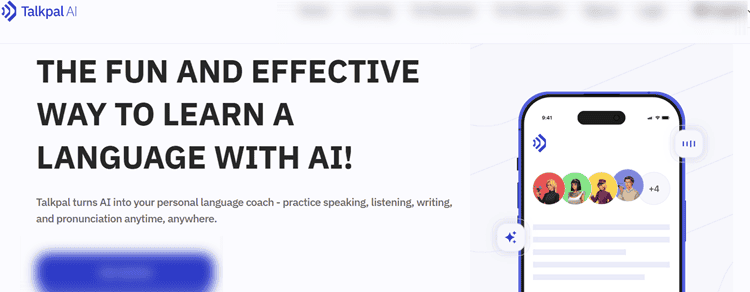
TalkPal AI is the most conversation-driven app in this roundup.
If your trip is coming up soon and you care less about textbook structure than speaking with confidence, this one makes a strong case for itself.
Key Features:
- GPT-powered AI tutor
- 57+ languages
- Roleplays for travel, interviews, and daily situations
- Real-time pronunciation assessment
- 300+ guided learning experiences
User Experience:
Using TalkPal feels less like taking lessons and more like entering live practice situations.
That’s exactly why it can be so effective before travel.
You can simulate asking for directions, checking into a hotel, or ordering a meal and get corrections instantly.
Pricing:
Free plan with a 10-minute daily cap; Premium $14.99/month or $6.25/month on the 24-month plan.
Includes a 14-day free trial.
Pros:
- Excellent for speaking confidence
- Huge language range
- Fast, interactive, and personalized
- Great roleplay-based travel prep
Cons:
- No real offline usability
Best For:
Last-minute travelers, confident beginners, and tech-savvy users who want realistic speaking drills fast.
Expert Opinion:
TalkPal AI is impressive, especially when you need quick conversational readiness.
Its biggest drawback is dependence on connectivity, which matters abroad.
Still, if speaking is your top priority, it deserves serious attention alongside artificial intelligence tools for language learning aimed at active conversation practice.
Get started with TalkPal AI.
3. Busuu
Best for Cultural Depth & Native Speaker Feedback.

Busuu brings something the others mostly don’t: human feedback.
That matters more than many travelers realize, because pronunciation and phrase accuracy often improve fastest when a real speaker can point out what sounds unnatural.
Key Features:
- 14 CEFR-aligned courses
- Native speaker community feedback
- Personalized pronunciation practice
- Live lessons with teachers
- AI-powered study plans
User Experience:
The user experience is structured but more socially grounded than Babbel.
If you like learning with context and correction, Busuu can feel more satisfying than purely AI-led tools.
Its community features are especially useful for study-abroad learners and travelers who want to connect more authentically rather than memorizing isolated phrases.
Pricing:
Free limited plan; $12.99/month, $55.99 for 6 months, or $72.99/year ($6.08/month).
Includes a 14-day money-back guarantee.
Pros:
- Valuable native speaker feedback
- Strong CEFR alignment
- Good for cultural nuance and accuracy
- Premium annual pricing is competitive
Cons:
- Fewer languages than Mondly or TalkPal
Best For:
Study abroad students, culturally curious travelers, and professionals who want authentic, polished communication.
Expert Opinion:
Busuu is one of the best picks for travelers who care about sounding more natural, not just understood.
The human layer is its standout benefit.
It also overlaps nicely with tools for business language learning for users preparing for meetings, relocation, or international work travel.
Get started with Busuu.
4. EWA
Best for Fun, Budget-Friendly Immersion.
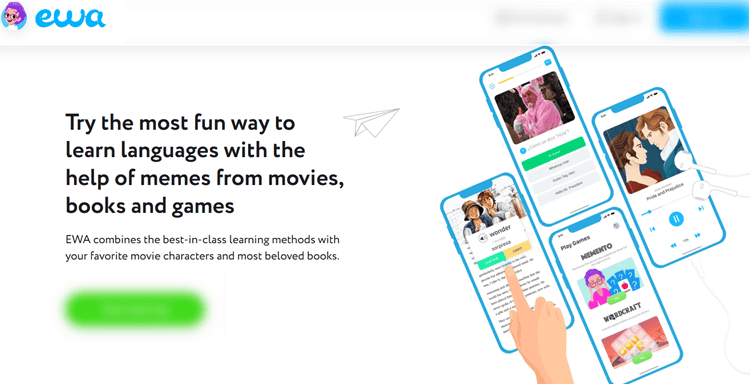
EWA is the wildcard in this list, and that’s exactly why many travelers will love it.
Instead of leaning heavily on traditional lesson structures, it teaches through movies, TV clips, books, audiobooks, and games.
If you’ve ever bounced off rigid language apps, EWA may feel refreshingly easy to stick with.
Key Features:
- Learning through movie scenes, books, and audiobooks
- AI Tutor for speaking scenarios
- Game-based review
- Very affordable annual pricing
- English-focused business and conversation options
User Experience:
EWA’s interface is engaging and entertainment-driven.
You don’t always feel like you’re “studying,” which can be a huge advantage for consistency.
It’s especially appealing for casual travelers and budget users who want to absorb common vocabulary and conversational rhythms without long grammar sessions.
If you like media-led learning, it fits naturally beside travel phrasebook alternatives for casual learners and other lightweight prep tools.
Pricing:
3-day free trial; $8.95/month, $5.69/month for 6 months, or $3.95/month annually.
Offers a 14-day refund guarantee.
Pros:
- Lowest annual price in this roundup
- Fun, low-pressure learning style
- Excellent for entertainment lovers
- AI Tutor adds modern speaking practice
Cons:
- Best depth is still strongest for English-oriented learning
Best For:
Budget travelers, pop-culture learners, and people who dislike traditional lesson formats.
Expert Opinion:
EWA is not the most academically rigorous app here, but it may be the easiest one to keep using every day.
For travelers who learn best through immersion and entertainment, that consistency can matter more than perfect structure.
Get started with EWA.
5. Babbel
Best for Structured Learning for Absolute Beginners.

Babbel remains one of the easiest apps to recommend to travelers starting from zero.
Its biggest advantage is structure: short lessons, logical progression, and real-life dialogues that help you build confidence steadily instead of guessing your way through random phrases.
Key Features:
- 15-minute expert-designed lessons
- Travel-focused dialogues and topic courses
- Downloadable lessons for offline use
- AI-enhanced speech recognition
- Strong research backing from Yale, CUNY, MSU, and USC
User Experience:
The app feels polished and calm rather than flashy.
That makes a difference for beginners, especially if you’re overwhelmed by too many options.
Babbel gives you a path.
The pacing is manageable, the explanations are clear, and the grammar support is much better than what you get from many casual language apps.
Pricing:
Free introductory access; paid plans start at $14.95/month, with the 12-month single-language plan at $7.45/month.
All-languages plans and gift/lifetime options are also available.
Pros:
- Excellent for absolute beginners
- Strong offline access
- Research-backed learning design
- Real-world dialogues are genuinely useful
Cons:
- Only 14 languages
- Less useful for niche destinations
- AI speaking practice is not as deep as TalkPal AI
Best For:
First-time learners, leisure travelers to Europe or Latin America, and business travelers who prefer structure.
Expert Opinion:
Babbel is still the gold standard for travelers who want a dependable framework.
If your destination is covered and you want real progress without chaos, it’s an easy pick.
Get started with Babbel.
Comparison Summary — Which App Should You Choose?
| App | Best For | Biggest Strength | Starting Price |
|---|---|---|---|
| Mondly | Multilingual travelers & niche destinations | 41 languages + offline travel topics | Free / $9.99/mo |
| TalkPal AI | Fast conversation practice | AI roleplay and speaking feedback | Free / $6.25/mo |
| Busuu | Cultural depth & native feedback | Community corrections and CEFR structure | Free / $6.08/mo |
| EWA | Fun, budget-friendly immersion | Movie/book-based learning and low price | Free trial / $3.95/mo |
| Babbel | Structured beginner learning | Research-backed, guided lessons | Free trial / $7.45/mo |
If you want the safest all-purpose recommendation, choose Mondly.
If you want to speak quickly before departure, TalkPal AI is the better fit.
If you’re an absolute beginner, Babbel is still the most reliable.
For cultural nuance, go with Busuu.
For affordability and entertainment, EWA wins.
How We Chose These Apps
To keep this guide useful for actual travelers rather than just app collectors, we focused on the features that matter most once you leave home.
That included travel-specific phrase coverage, pronunciation help, beginner accessibility, pricing transparency, mobile experience, and whether an app still works well when your connection doesn’t.
We looked at language variety, especially for travelers visiting less common destinations.
Research credibility mattered too, which is why expert-backed frameworks like CEFR alignment and Pearson’s Global Scale of Languages were part of the evaluation.
Price range was another factor.
EWA is the budget pick at $3.95/month on annual billing, while Mondly offers strong long-term value with lifetime access to 41 languages.
Babbel and Busuu sit in the premium-structured category, while TalkPal AI offers aggressive long-term pricing but costs more month to month.
Side-by-Side Feature Comparison — All Five Apps
| Feature | Mondly | Babbel | TalkPal AI | Busuu | EWA |
|---|---|---|---|---|---|
| AI Conversation Practice | ✅ Speech recognition | ✅ AI partner | ✅ GPT-powered | ✅ AI study plans | ✅ AI Tutor |
| Travel-Specific Topics | ✅ 50 topics | ✅ Travel courses | ✅ Roleplay scenarios | ✅ Real-world focus | ✅ Movie scenarios |
| Pronunciation Tools | ✅ | ✅ | ✅ | ✅ | ✅ |
| Best Monthly Price | $9.99 | $7.45/mo | $6.25/mo | $6.08/mo | $3.95/mo |
Here’s the simplest takeaway.
Mondly is the strongest all-rounder for travel breadth, Babbel is the easiest recommendation for total beginners, TalkPal AI is best if you want to start speaking quickly, Busuu is the most human-centered option, and EWA is the most fun for budget-conscious learners.
Category winners from testing:
- 🌍 Most Languages: TalkPal AI
- 📡 Best Offline Use: Mondly and Babbel
- 💰 Best Value: EWA
- 🎯 Best Travel Scenarios: Mondly
- 🔬 Most Research-Backed: Babbel
- 👥 Best Community Learning: Busuu
If your main goal is conversation readiness, you may also want to compare which language learning apps are best for speaking practice before choosing a subscription.
Before we wrap up with the final verdict, it helps to answer a few of the most common traveler questions about how much language you actually need.
Travel Language FAQs — What You Actually Need Before You Go

One of the biggest myths in travel prep is that you need to “learn the language” before you can use it abroad.
In reality, most travelers need a small, high-use set of phrases far more than they need full fluency.
If you’re choosing among the best language learning apps for travel, the smarter question is whether an app can help you handle the moments that matter most.
Can You Learn Enough Language for Travel in Just 2 Weeks?
Yes — if your goal is basic travel functionality, not fluency.
In two weeks, many travelers can learn enough to greet people, order food, ask simple directions, check into a hotel, and handle a few basic emergencies.
That’s why apps like TalkPal AI and Mondly work especially well for short timelines: they focus on practical scenarios instead of academic completeness.
A realistic two-week goal is learning 50 to 150 useful travel phrases, plus key vocabulary like numbers, time, transport words, and polite expressions.
What Should You Learn First in a New Language Before Traveling?
Start with what you’ll actually use on day one:
- Hello / goodbye / please / thank you
- Yes / no / excuse me / sorry
- How much is this?
- Where is the bathroom?
- I have a reservation
- I don’t understand
- Can you help me?
- I would like…
- Left / right / straight ahead
- Emergency basics like “doctor,” “pharmacy,” or “call the police”
For this kind of travel phrase priority, Mondly and Babbel are especially strong because their lessons are organized around real travel situations rather than random vocabulary lists.
Can a Language App Help You Order Food, Ask for Directions, and Check Into a Hotel?
Absolutely — and this is where the best language learning apps for travel prove their value.
A good app won’t make you sound local overnight, but it can prepare you for the most common travel interactions.
In testing, Mondly was especially useful for restaurant, hotel, and transport scenarios, while TalkPal AI stood out for roleplay practice that mimics real conversations.
If that’s your main goal, focus less on total lesson count and more on:
- travel-specific topics
- pronunciation support
- offline access
- speaking practice
What Language Level Do You Actually Need to Travel Confidently Abroad?
For most trips, you do not need advanced proficiency.
Something around a survival beginner level is often enough for a smoother experience, especially if you can pronounce key phrases clearly and understand simple replies.
Think of confidence abroad as a mix of useful vocabulary, listening tolerance, and willingness to try, not perfect grammar.
That’s also why Babbel, Busuu, and Mondly are such practical picks: they help beginners build functional communication quickly enough to make travel feel easier, friendlier, and far less stressful.

Final Verdict: The Best Language Learning App for Your Travel Style
The best language learning apps for travel are not all trying to do the same job, and that’s a good thing.
Mondly is the strongest overall pick for travelers who want language variety, travel-ready topics, and offline convenience.
TalkPal AI is ideal when speaking confidence matters most and time is short.
Babbel is still the best structured option for nervous beginners, Busuu works beautifully for authentic communication, and EWA is the easiest budget-friendly app to enjoy daily.
If you’re traveling through multiple countries, we’d start with Mondly.
If you’re flying in two weeks and want fast speaking drills, try TalkPal AI.
If you want a clear learning plan, choose Babbel.
If cultural accuracy matters, go with Busuu.
If you need something fun and affordable, EWA is surprisingly effective.
Start your free trial today and speak your destination’s language before you land.