Busuu vs Babbel: A Complete Language App Comparison Guide
Language learning apps have soared in popularity, especially in the era of mobile-first education.
With over 1.5 billion people learning new languages globally, apps like Busuu and Babbel have become essential tools in modern self-paced education.
In this article, we’ll dive deep into Busuu vs Babbel to help you determine which platform best fits your goals.
Both apps are industry leaders, offering polished mobile and desktop experiences, guided lessons, and subscription plans.
But with some differences in teaching methodologies, language choices, user interaction, and niche features, your decision might hinge on subtle yet important details.
Whether you're seeking advanced tools for speaking practice or interactive content tailored to cultural learning, this breakdown will provide the clarity you need.
🟢 Busuu vs Babbel at a Glance
The core difference: Busuu excels through community-based learning with native speaker feedback and CEFR alignment, while Babbel prioritizes structured, research-backed lessons with strong grammar and speech recognition tools.

Busuu
Interactive platform with 120M global learners, offering native speaker feedback, AI study plans, and live teacher lessons across 14 languages.

Babbel
Research-backed method with 92% user improvement in 2 months, featuring speech recognition, expert-designed courses, and 15-minute lessons.
Best for conversational fluency and speaking practice: Busuu
Best for structured, short lessons with speech training: Babbel
🔹 Busuu key strengths:
- Native speaker corrections and live lessons
- CEFR-based certification & AI study plans
- Lower annual pricing ($72.99 vs. Babbel’s $89.40)
🔹 Babbel key strengths:
- Scientifically backed “Babbel Method”
- AI speech recognition & cultural content
- Better for learning multiple languages (All-Language plan)
Choose Busuu if you value peer feedback and exam-ready paths; go with Babbel for quick, polished lessons and strong pronunciation tools.
👉 Read on for our detailed analysis of features, pricing, and use cases.
Quick Comparison Table
| Feature | Busuu | Babbel |
|---|---|---|
| Languages Offered | 14 (includes Japanese, Chinese, Korean) | 14 (includes Swedish, Norwegian, Indonesian) |
| Core Focus | Community-based learning + CEFR curriculum | Conversation-driven + Research-backed methodology |
| Premium Features | AI study plans, Live Lessons, community corrections | Speech tech, podcasts, cultural notes |
| Price (Annual) | $72.99 ($6.08/month) | $89.40 ($7.45/month) |
| Business Solution? | Yes – 600+ brands use it | Yes – over 2,000 clients |
| Unique Strength | Native speaker community | AI-based speech recognition |
| Free Trial? | 14-day money-back guarantee | First lessons free (up to 80 total) |
Key Features
Busuu centers its platform around CEFR-aligned lessons and a robust native speaker community.
Learners benefit from bite-sized modules strengthened with feedback mechanisms and live video lessons.
One standout from Busuu is its community peer review system, allowing real users to correct exercises and offer cultural insights.
This is a huge win for oral expression and accent feedback, especially for learners focused on real-world conversational fluency.
Babbel, on the other hand, champions structured conversations through its “Babbel Method,” developed by 200+ language experts.
Its speech recognition tools and AI-powered conversation trainers emulate everyday scenarios.
The embedded grammar explanations are an asset for those looking to deepen their understanding of linguistic structures in a practical context.
Where Busuu encourages a blended model of social and autonomous learning, Babbel excels through structured self-study with a personalized touch.
It appeals strongly to learners who prefer a clear path and data-based insights for fast language acquisition.
User Experience
Both apps are available on web and mobile, but their UI philosophies differ significantly.
Busuu employs a clean, minimal interface that encourages consistency across multiple devices.

Its Learning Path is guided by AI and constantly adjusted based on performance metrics.
Babbel, meanwhile, presents bite-sized lessons that average 10–15 minutes.
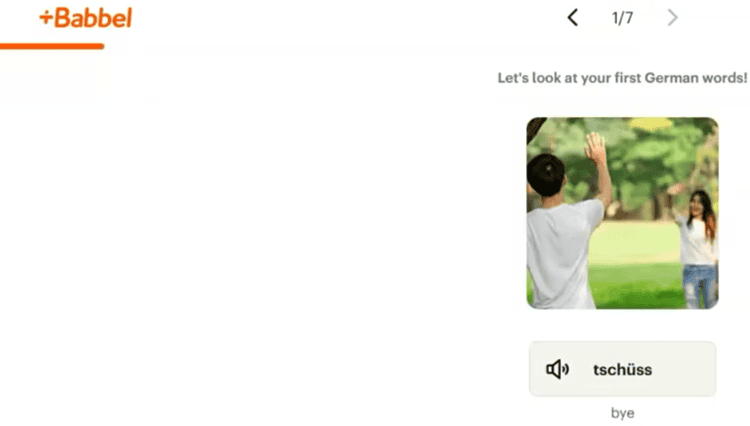
Its cards and quiz formats are particularly helpful for reviewing vocabulary.
The app’s visual learning aids and progressive feedback tools provide a “learn by doing” approach which feels more methodical.
That said, Babbel lacks any significant community integration, highlighting a core difference: Whereas Busuu leverages peer interaction for growth, Babbel focuses internally on the learner’s personal journey.
For a more tailored perspective, read more on our thoughts on Busuu where we explore how it rises above in peer-based learning environments.
Performance and Reliability
Performance-wise, both platforms offer stable capabilities.
Busuu excels in real-time sync between devices, ensuring that your progress is always aligned regardless of where you study.
Many users appreciate the seamless lesson continuity across mobile and desktop.
Babbel’s strength lies in uptime and speech tech reliability.
Its AI-enhanced speech recognition performs very well, even with different accents.
The app also demonstrates consistent performance during live sessions and podcast streaming.
Both apps provide offline capabilities, including downloadable lessons, making them ideal for users in transit or with limited connectivity.
Pricing and Plans
One of the deciding factors for many learners is price.
Here's how the two stack up:
Busuu:
- Monthly: $12.99
- 6-Month: $55.99 total ($9.33/mo)
- Annual: $72.99 ($6.08/mo, 53% off)
Babbel:
- Monthly: $14.95 (Single Language)
- 6-Month: $66.90 ($11.15/mo)
- Annual: $89.40 ($7.45/mo)
- All Languages: $107.40 annually ($8.95/mo)
Both platforms support refunds and limited trials.
While Busuu’s pricing is generally lower, Babbel offers more flexible gift plans and all-language access options.
Pros and Cons
Busuu Pros:
- Native speaker community feedback
- CEFR-aligned curriculum structure
- Strong free plan with feedback
- Live tutoring available
Busuu Cons:
- AI sometimes influences learning flow
Babbel Pros:
- Proven effectiveness with research backing
- High-quality cultural content
- Exceptional lesson clarity and structure
- Strong pronunciation feedback tools
Babbel Cons:
- Lacks peer interaction
Babbel stands out, particularly, in structured grammar and speech recognition training.
Depending on your goals, whether it’s fluency speed, conversational focus, or language variety, let’s explore how each app performs in specific scenarios.
Which App Helps You Reach Fluency Faster?

When it comes to building real fluency—not just memorizing vocabulary—both Busuu and Babbel offer compelling paths, but their approaches yield different strengths depending on your learning strategy.
Busuu fast-tracks fluency through a community-powered approach that puts consistent speaking practice front and center.
With teacher-led live lessons, feedback from native speakers, and AI-personalized learning paths, Busuu encourages active usage of the language from the early stages.
Its integration of real-world scenarios, combined with recurring peer corrections, helps break the barrier most learners face with oral proficiency and confidence.
Babbel, on the other hand, delivers fluency through methodical lesson progression and scientifically validated methods.
Its conversation trainers and AI-enhanced pronunciation feedback simulate real-life dialogues, making it easier to transition from passive knowledge to spoken fluency.
However, Babbel’s structured path may suit those who prefer predictable lesson logic over peer engagement.
Verdict:
For those aiming to gain spoken fluency quickly, Busuu’s interactive community and speaking focus offer an edge.
Yet, if you favor structured repetition and self-guided progress with solid grammar reinforcement, Babbel is a trustworthy companion.
Can You Learn Conversational Skills Faster with Busuu or Babbel?
Both platforms support conversational development, but in different ways.
Busuu gets learners talking early with Live Lessons and scenario-based exercises.
Its native speaker feedback system allows you to test your communication in context, making it ideal for quickly honing phrases that matter in day-to-day conversations.
The “immersion-first” approach, reinforced with bite-sized video clips and speaking drills, mimics real conversations with a loop of feedback and correction.
Babbel approaches conversation by guiding you through practical dialogues from lesson one.
With built-in interactive audio conversations and speech recognition, it replicates how conversations flow in real life, but with a more polished, scripted flavor.
It’s less spontaneous than Busuu but fantastic for those building foundational speaking skills.
Verdict:
Need to start talking faster?
Choose Busuu for its hands-on feedback and peer dialogue approach.
Prefer to master structured phrases before speaking freely?
Go with Babbel.
Is Busuu or Babbel Better for Learning Multiple Languages at Once?

If you’re a polyglot-in-the-making or just interested in learning more than one language simultaneously, comparing how each platform handles multi-language learning is essential.
Busuu makes it easy to toggle between languages, offering consistent navigation and lesson progression across all 14 languages.
However, you'll need to manually switch languages to reset your learning path and track progress separately.
While it doesn’t offer a dedicated “All Languages” plan, the platform’s clarity of structure and community involvement remain consistent across languages.
Babbel goes a step further with its All-Language subscription plan, giving you access to all 14 languages under one login.
You can easily access lessons from multiple courses without friction, and the app saves your place in each language.
It’s a better platform for language dabblers or those learning region-specific variations, like Spanish (Spain) vs. Spanish (Latin America).
Verdict:
Babbel wins on multi-language accessibility and plan flexibility, while Busuu delivers solid individual language support, just not optimized for polyglots on a single plan.
Which App Works Better for Long-Term Language Retention?
When it comes to retaining what you learn, the right reinforcement mechanisms make all the difference.
Busuu employs a Spaced Repetition System (SRS) to aid long-term retention, coupled with personalized AI review strategies.
Its combination of reading, listening, and peer-reviewed writing enables deeper memory encoding.
Moreover, its CEFR-based path revisits concepts contextually, reinforcing both structure and usage patterns over time.
Babbel also embraces SRS principles, but shines in its ability to create memory hooks through real-world relevance.
Cultural stories, podcasts, and scenario-based lessons ensure learners internalize not just the words but their practical context.
Grammar is consistently revisited, which aids pattern recognition and long-term syntactic recall.
Verdict:
For academic-style, framework-supported retention, including exam prep, Busuu has the edge.
For cultural immersion and intuitive phrase recall, Babbel performs exceptionally.
Use Cases
Ideal For:
| User Type | Best Platform | Why |
|---|---|---|
| Budget-conscious learners | Busuu | Lower annual subscription and decent free features |
| Travelers & casual learners | Babbel | Quick access to conversation scenarios |
| Students preparing for CEFR exams | Busuu | Direct CEFR alignment |
| Busy professionals | Babbel | Shorter lessons with strong grammar support |
| Businesses | Both | Busuu offers personalized enterprise training; Babbel excels in team-based reporting |
Unique Selling Points
Busuu’s interactive corrections from native speakers set it apart.
Learners don’t just consume, they also contribute, creating a social loop of feedback.
In addition to the above, its CEFR framework and live teacher sessions make it suitable for long-term mastery.
Babbel’s biggest asset is its scientifically verified Babbel Method.
With studies from Yale, MSU, and CUNY confirming its results, users can trust the app’s efficacy.
Tools like speech recognition, cultural articles, podcasts, and visual trackers further deepen the experience.
Looking to structure your language learning path based on academic benchmarks?
Busuu might be your best match.
Expert Opinion
From an expert’s perspective, your choice between Busuu and Babbel depends on your motivation and learning style.
Choose Busuu if:
- You value community interaction and live feedback
- You’re studying for CEFR exams or want a structured, European-standard progression
- You're intrigued by AI-powered personal study plans
Choose Babbel if:
- You need spelled-out grammar and pronunciation support
- You're a business user seeking dashboards and ROI reporting
- You want fast, conversation-focused outcomes with researched backing
We find Busuu particularly relevant for social learners, while Babbel’s clarity and brevity helps in refreshing grammar for quick conversational goals.
Head-to-Head Comparisons
| Category | Winner | Why |
|---|---|---|
| Community Feedback | Busuu | Native speaker interaction |
| Lesson Structure | Babbel | User-friendly, short lessons |
| Grammar Explanations | Babbel | Built-in, contextual grammar help |
| Certification | Busuu | CEFR-based certificates |
| Pronunciation Tools | Babbel | AI speech recognition edge |
| Business Training | Tie | Both offer robust enterprise packages |
| Price-to-Value Ratio | Busuu | More affordable annual pricing |
Babbel clearly leads in pronunciation and structured dialogues, while Busuu claims the top spot for interactive learning with community feedback.
Busuu
Babbel
Conclusion and Verdict
In the battle of Busuu vs Babbel, the better platform depends entirely on your needs and learning goals.
Busuu is perfect for learners who want community engagement, CEFR certification, and live sessions.
It's cost-effective and beginner-friendly, with extra appeal for long-term fluency builders.
Babbel excels for goal-driven learners seeking speech recognition, cultural context, and rigorously tested learning paths.
It’s a solid pick for professionals, short-term travelers, or grammar-focused users.
Ultimately, try both.
Take advantage of Busuu’s 14-day money-back guarantee and Babbel’s free first-course trial.
Choose the platform aligned with your goals, whether it’s to chat with locals, impress global clients, or become fluent in a second (or third) language.