Duolingo vs Langotalk: A Complete Language App Comparison Guide
Language learning is booming in the digital age, with mobile apps making it more accessible, personalized, and engaging than ever before.
Millions of users worldwide are now choosing apps over classrooms to acquire new languages for travel, work, or personal growth.
Two names that often surface in the conversation are Duolingo and Langotalk—each with a distinct learning philosophy and audience.
In the head-to-head Duolingo vs Langotalk comparison, understanding the differences in teaching style, pricing, AI implementation, and target users is important.
Duolingo, with over 500 million users, is synonymous with gamified learning and has established itself as a top educational app.
On the other hand, Langotalk is rapidly gaining attention for its AI-powered conversational focus and streamlined practice sessions, ideal for building speaking confidence.
Whether you're seeking a fun, casual experience or are ready to dive into real-life conversations, this guide will help you decide which platform fits your goals best.
🔍 Duolingo vs Langotalk at a Glance
Duolingo is ideal for beginners seeking a free, gamified way to build basic language skills, while Langotalk caters to serious learners aiming to speak fluently through realistic AI-powered conversations.

Duolingo
Gamified learning with 100+ courses across 40+ languages.
Free tier available with 500M+ users worldwide.
Research-backed methodology.

Langotalk
AI-powered tutors for speaking practice across 19 languages.
Real-time feedback and personalized lessons.
Conversation-first approach.
✅ Recommendation: Start with Duolingo for fundamentals, then use Langotalk to strengthen real-world speaking skills.
Choose Duolingo if you want:
- A free or low-cost entry point (Free or $6.99/month)
- Fun, bite-sized lessons to build vocabulary and grammar
- Support for 40+ languages
Choose Langotalk if you need:
- Daily AI-driven speaking practice to accelerate fluency
- Real-time pronunciation feedback and natural dialogues
- A faster path to conversational confidence (~3–6 months)
Read on for our detailed analysis of which app best fits your language goals.
Quick Comparison Table
| Feature | Duolingo | Langotalk |
|---|---|---|
| Primary Focus | Comprehensive gamified learning | AI-driven conversational fluency |
| Languages Offered | 40+ languages | 19 languages |
| Pricing Model | Freemium ($6.99/mo premium) | Subscription-only ($29.99/mo or $79.99/year) |
| User Base | 500M+ | 500,000+ |
| Best For | Beginners and casual learners | Intermediate to advanced learners |
| Free Option | Yes | 7-day trial only |
| Platforms | iOS, Android, Web | iOS, Android, Web |
Key Features
Duolingo
Duolingo uses a gamified system to guide learners from basic vocabulary to more complex sentence structures.
The app employs bite-sized lessons, streaks, heart limits, and badges to motivate users.
AI dynamically adjusts lesson difficulty, offering practice where you're weakest through personalized review sessions.
Other key features include:
- Skill trees for structured learning
- Reading exercises through Stories in select languages
- Vocabulary review and streak rewards
- External certification through the Duolingo English Test
For more details, check out our Duolingo review that breaks down every feature and how it helps beginners get started.
Langotalk
Langotalk trades gamification for immersion, centering its system around AI tutors that engage users in realistic two-way conversations.
These conversations help reinforce vocabulary retention and fluency much faster by mimicking real-world usage, which is highly beneficial for learners who've mastered the basics.
Key features include:
- Natural dialogue simulations
- Voice and text interactions to strengthen speaking and listening
- Customizable lesson content based on your interests and goals
- Progress-monitoring dashboard and vocabulary decks
Langotalk fits perfectly for learners who are moving past basic grammar drills and need to use the language actively.
Dive deeper into this approach in our guide to using Langotalk for language learning.
Unlike Duolingo’s scoreboard-driven repetition, Langotalk focuses on fluency and functional communication—ideal for professionals or frequent travelers.
User Experience
Duolingo
Duolingo’s bright, friendly interface is instantly recognizable.
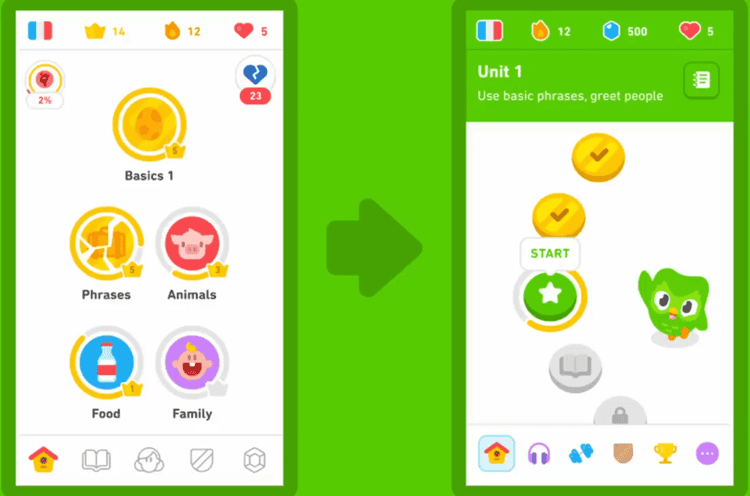
Its mobile-first layout and engaging visuals are geared towards short-term daily sessions.
The intuitive layout and cartoon mascot help build habit formation and reduce frustration for new learners.
Various modules like listening, matching, and fill-in-the-blanks ensure variety.
However, because much of the input is passive, it lacks interactive depth—especially in conversations.
Langotalk
Langotalk sports a minimalist, professional interface that resembles a real messaging app.
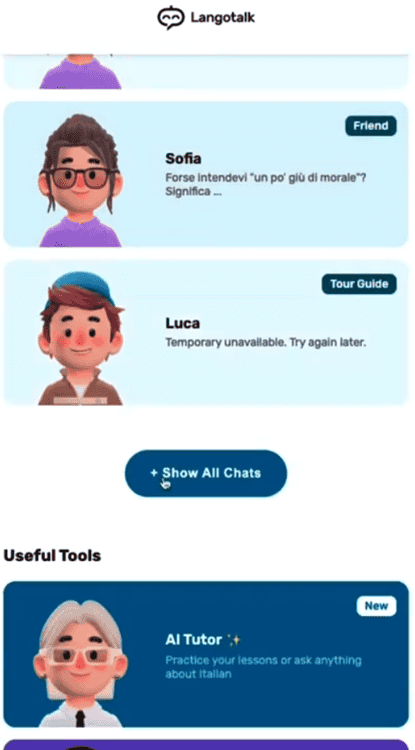
The chat-style format and voice interaction make the experience feel natural and human.
Custom responses by AI tutors adapt to your language level, helping push you forward without being overwhelming.
It may lack the fun visuals of Duolingo, but what it offers is a very focused path toward fluency.
The learning curve can be steeper at first—especially for those who haven’t done much speaking—but the payoff is immense for real-life language use.
Performance and Reliability
Langotalk works smoothly across web and mobile platforms with reliable voice input and AI spontaneity.
Its advanced AI can catch pronunciation and grammar mistakes in real-time and suggest improvements, making each practice session feel like an actual tutoring experience.
Duolingo, on the other hand, benefits from years of refinement.
The app is quick to load, rarely crashes, and updates frequently.
However, while Duolingo recently introduced some AI features, the app still lacks the fluid conversational ability found in Langotalk.
For mobile-first users, Duolingo might have the edge in speed and downtime.
However, mobile language learning experiences compared show that Langotalk’s real-time interaction ensures active learning rather than memorization.
Pricing and Plans
Duolingo
Duolingo offers a freemium model:
- Free Tier: Includes core lessons with ads and limited hearts (attempts)
- Super Duolingo ($6.99/mo): Removes ads, adds unlimited hearts, and grants personalized practice tools
- Family Plan ($9.99/mo): Covers 6 accounts with all features
It’s an excellent starting point for new learners who are hesitant about making a financial commitment.
Langotalk
Langotalk uses a subscription-only model:
- 7-day free trial
- Monthly: $29.99
- Annual: $79.99 (effective $6.67/month)
- Lifetime: $149.99
- 3-month money-back guarantee
While Langotalk is more expensive upfront, the value lies in its specialty—natural conversation practice and real-time feedback.
It’s designed for learners serious about progressing in fluency quickly.
Pros and Cons
Duolingo
Pros
- Free and accessible
- Gamified and addictive
- Available in 40+ languages
- Excellent for beginners
Cons
- Weak conversational practice
- Can become repetitive
- Depth varies by language
Langotalk
Pros
- Real conversation simulations
- Personalized AI feedback
- Fluent-focused with practical language use
- Customizable lessons
Cons
- No free version after trial
- Smaller language selection
Use Cases

- Casual learners looking to test out a new language will find Duolingo’s lightweight modules and gamified system enjoyable and low-pressure.
- Intermediate learners or professionals needing speaking skills for business or travel will benefit more from Langotalk’s AI-driven conversations.
- Multilingual learners may prefer Duolingo, which allows working on multiple languages in parallel.
- Academic or test-prep learners could consider Duolingo for grammar drills and then transition to Langotalk for speaking-focused language exam practice.
Unique Selling Points
What truly sets Langotalk apart is the AI interaction—fluid, human-like conversations that simulate real-world usage.
The ability to receive instant pronunciation corrections makes it feel like a personal tutor in your pocket.
Meanwhile, Duolingo’s appeal lies in universal accessibility and consistency.
It scales effortlessly from total beginner to intermediate, and its wide language offering makes it ideal for exploring less common tongues like Irish, Swahili, or Hawaiian.
For those wondering how AI changes language learning, these differences highlight growing shifts away from static coursework toward immersive AI-based instruction.
How Long Does It Take to Learn a Language Using Duolingo or Langotalk?
When choosing between Duolingo and Langotalk, one key question many learners have is: how long will it take to become fluent?
The answer depends heavily on your starting level, language goals, and, importantly, which app you choose.
Learning Time with Duolingo
Duolingo's daily lessons are short and cumulative, making it a great slow-burn option for learners who favor long-term consistency over intensive immersion.
Based on research and user data:
- Completing a Duolingo course can take 6–12 months with consistent daily use (~15–20 minutes per day).
- However, finishing the course doesn't guarantee fluency—it typically gets users to an upper A2 or low B1 CEFR level (e.g., functional reading and listening, but limited speaking confidence).
- Duolingo works best when paired with outside resources—like conversation apps, native listening practice, or grammar drills.
Learners often use Duolingo as a language foundation—building vocabulary and grammatical understanding before branching into real-world interaction tools like Langotalk.
Learning Time with Langotalk
Langotalk is designed for faster speaking proficiency, as the app immerses learners in active conversation from the beginning.
With just 15 minutes per day, Langotalk claims users can:
- Reach basic conversational fluency (B1) in around 3–6 months.
- Improve listening and speaking speed significantly sooner due to AI feedback and real-time corrections.
- Learn contextually—by talking about what matters to you—which improves retention and recall.
Of course, your results depend on consistency, but because Langotalk mimics real-life interaction, users typically report faster progress in spoken language compared to passive apps.
Which App Gets You Fluent Faster?
If your goal is to improve speaking fluency quickly, Langotalk's AI-driven interactions will likely get you there sooner—especially once you’ve nailed the basics elsewhere.
But for absolute beginners who are building up from zero or who want to deepen structural understanding first, Duolingo provides the best ramp-up before transitioning to more immersive tools like Langotalk.
The most effective language learners often use both apps together—relying on Duolingo for structure, and Langotalk for practical application and fluency gains.
Which App Is Better for Absolute Beginners: Duolingo or Langotalk?
While both platforms support learners at various stages, Duolingo is clearly better suited to absolute beginners.
Why Duolingo Works Well for Beginners
- No prior knowledge required—you can start from scratch with guided tutorials
- Clear lesson progression from basic words to simple sentences
- Gamified motivation to maintain streaks and build confidence
- Lessons are bite-sized, ideal for building a habit without being overwhelming
- Tutorials cover alphabet, pronunciation, and basic grammar rules, especially useful for languages like Japanese, Russian, or Arabic.
Duolingo removes the intimidation that often comes with starting a new language.
Its playful style, low-stress design, and freemium accessibility make it the perfect on-ramp for curious beginners testing the waters.
Why Langotalk May Be Advanced for New Learners
Langotalk includes some beginner-friendly templates and vocabulary decks, and AI tutors can adjust to your level—but because the app is built around conversation, new users may initially struggle if they don’t yet recognize basic sentence structures.
That said, Langotalk features English-speaking AI tutors and translation prompts to ease into conversations.
So while it isn’t off-limits to beginners, it's more powerful once you've mastered fundamentals—which makes it an ideal follow-up to Duolingo.
Can You Reach Fluency with Just Duolingo or Langotalk?
Both Duolingo and Langotalk can take you a long way—but neither is a complete solution on its own if your goal is full fluency.
Duolingo: Great for Foundations, Not Full Fluency
Duolingo excels in introducing language basics—teaching you vocabulary, grammar rules, and simple reading comprehension.
But:
- It lacks real spontaneous interaction, which is vital to internalizing a language
- Speaking exercises are often scripted, and errors aren’t typically corrected in real-time
- You may become highly familiar with isolated phrases, but struggle to apply them freely
Langotalk: Fluency-Boosting but Still Needs Supplementation
Langotalk focuses on what's often missing from traditional apps—realistic, dynamic conversation practice.
You’ll develop:
- Speaking agility and listening comprehension
- Language flexibility to handle unfamiliar topics
- The instinct to self-correct as phrases become second nature
That said, Langotalk doesn’t tutor grammar fundamentals extensively.
For best results, users often supplement Langotalk with structured platforms like Duolingo or grammar books in the early stages.
Best Path to Fluency?
Use Duolingo to build your grammar and vocabulary for a few months. Then, switch or combine with Langotalk to develop speaking and conversational fluency.
Integrating both can move you from textbook knowledge to real-world fluency in a matter of months.
Customer Support and Resources
Duolingo features robust forums, help centers, and an active community that crowdsources explanations and insights.
Additionally, the company offers educational extensions like Duolingo for Schools and Duolingo ABC.
Langotalk provides timely email support and app-based ticket resolution, with helpful onboarding resources, lesson tracking, and vocabulary tools.
Regular updates indicate strong developer engagement and user responsiveness.
Future Developments
Duolingo continues to expand with side apps such as Duolingo Math and Duolingo ABC, showing ambition beyond language learning.
Newer features involving AI-driven explanations and smarter review scheduling are in the pipeline.
Langotalk, still early in its lifecycle, continues refining speech AI, expanding its lesson modules, and enhancing the user interface.
Its developers introduce weekly features—an agile approach indicative of rapid growth and user-centered improvement.
Expert Opinion
If you’re just starting your language journey, Duolingo is hard to beat. Its ease of use, wide-ranging languages, and addictive gameplay make it the #1 gateway for polyglots-in-training.
It makes structured learning fun, particularly for young users or casual language dabblers.
Langotalk, however, is where the serious learners go when they want real-world fluency.
Its chat-like experience cuts through the fluff, throwing learners straight into scenarios they’re likely to face abroad or in professional settings.
The platform shines when your goal is to speak naturally and confidently, not just memorize phrases.
The ideal approach may be starting with Duolingo for vocabulary and grammar, then transitioning to Langotalk as your speaking skills need sharpening.
Head-to-Head Comparisons
| Category | Duolingo | Langotalk |
|---|---|---|
| Learning Focus | Vocabulary, grammar, reading | Speaking, listening, real conversations |
| AI Use | Adaptive content & review | AI chat tutors with real-time corrections |
| Languages Supported | 40+ | 19 |
| Pricing | Free/$6.99 premium | $29.99 monthly, $79.99 yearly |
| Conversation Practice | Limited | Core feature |
| User Base | 500M+ | 500K+ |
| Beginner Friendliness | High | Moderate |
Duolingo
Langotalk
Conclusion and Verdict
Duolingo is the better option for those new to language learning, people on a budget, and those exploring languages casually or academically.
It has the biggest reach, longest track record, and widest language availability—all while being fun and free.
Langotalk, though smaller and more premium-priced, is a potent tool for learners prioritizing conversational proficiency.
The AI-guided dialogues help bridge classroom learning with practical usage in the real world.
Our recommendation: Start with Duolingo to build your foundation. Transition to Langotalk once you're ready to speak the language you’re learning.
Or better yet—use both in parallel to maximize comprehension and fluency.