SpeakPal vs TalkPal: A Complete AI Language Tutor Comparison Guide
These days, AI-driven language learning apps have revolutionized the way people acquire new language skills.
Whether you're an expat, student, business professional, or simply looking to embrace a new culture, digital language platforms can offer accessible, affordable alternatives to traditional tutoring.
Two standout contenders in this rapidly growing space are SpeakPal and TalkPal—both leveraging AI to personalize and accelerate language learning.
In this detailed SpeakPal vs TalkPal comparison, we’ll dissect every angle, from features and pricing to usability and effectiveness, to help you decide which AI tutor aligns best with your learning style and goals.
✅ SpeakPal vs TalkPal at a Glance
What’s the difference?
SpeakPal offers structured, curriculum-based learning with offline resources and Teen Mode, ideal for disciplined learners and families. TalkPal brings immersive, GPT-powered conversations, real-time pronunciation corrections, and wider language support for users seeking spontaneous, real-world practice.

SpeakPal
AI-powered language learning in 30 languages with downloadable exercises.
Teen protection mode included.
$59.80/year for unlimited, ad-free access.

TalkPal AI
GPT-powered AI tutor offering 57+ languages with real-time feedback and pronunciation assessment.
14-day free trial, unlimited practice at $6.25/month.
Which is better?
Choose SpeakPal for structured, safe, and affordable language learning. Opt for TalkPal if you want conversational fluency through interactive roleplay and dynamic feedback.
Key differences:
- Best for beginners & students: SpeakPal, with downloadable worksheets and grammar-focused drills.
- Best for travel or real-life fluency: TalkPal, thanks to its 300+ immersive scenarios and 57+ languages.
- Pricing: SpeakPal costs less overall; TalkPal offers a 14-day free trial and better speech tools.
➡️ Read on for our detailed head-to-head breakdown of features, pricing, performance, and use cases.
Quick Comparison Table
| Feature | SpeakPal | TalkPal |
|---|---|---|
| Supported Languages | 30 (with regional variants) | 57+ |
| Free Plan | Basic tier (limited chat) | 10-minute daily chats |
| AI Tech Stack | Proprietary AI tutor design | GPT-powered conversational agent |
| Learning Focus | Structured curriculum with offline support | Immersive conversations and roleplay |
| Teen Safety Features | Teen Mode available | Not mentioned |
| Monthly Price | $9.80 promotional | $14.99 |
| Annual Plan | $59.80 (reg. $118.90) | $74.88 (24-month commitment) |
| Unique Features | Downloadable materials, writing practice | Roleplay, pronunciation tool, immersive chats |
Key Features
Both SpeakPal and TalkPal use AI to replicate the nuances of language tutors while enabling flexible, on-demand learning. However, their focus and implementation methods may differ.
SpeakPal: Structured Progression and Safety-First Design
SpeakPal emphasizes a traditional academic structure, ideal for learners who appreciate pacing, discipline, and clarity in their curriculum.
It includes step-by-step modules covering vocabulary, sentence formation, common dialogues, writing exercises, and downloadable worksheets for offline use.
One standout feature that's ideal for families or schools is Teen Mode, which ensures a safer environment for younger learners.
The platform helps users systematically build a strong grammar and writing foundation.
SpeakPal also shines in offering over 10,000 exercises integrated into its course framework, making it excellent for students who enjoy written drills or structured assessments.
For an extensive overview, don’t miss our SpeakPal review, where you can learn about its usability at length.
TalkPal: Immersive Conversations with Roleplay
TalkPal's core appeal lies in its 300+ AI-driven scenarios.
These range from simulated job interviews to casual street conversations, embedding vocabulary within real-world context.
Users interact with AI voices, receive pronunciation feedback, and explore unique conversation tracks designed for professionals, travelers, and advanced learners.
Its GPT-powered AI tailors learning dynamically, recognizing your tone and proficiency to adjust difficulty and response.
With 57+ languages, it’s the superior choice for multilingual users or those seeking less common languages like Hebrew, Greek, or Icelandic.
If you're curious how it stacks up against other AI tutors from a usability perspective, we've covered more about TalkPal AI.
User Experience
SpeakPal Interface
SpeakPal offers a layout geared toward orderly progression.
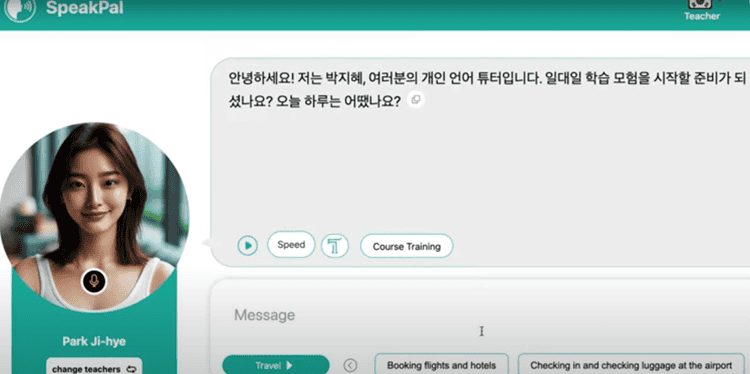
Navigation is clean and logical, with modules categorized by skill level and topic (e.g., business, travel, daily conversation).
You can download exercise PDFs, test vocabulary through gamified drills, and toggle Teen Mode in the user profile.
With its text and voice interactions, this platform caters to auditory and visual learners alike.
Still, users seeking highly engaging or spontaneous learning might find the rigidity a bit predictable.
TalkPal Interface
TalkPal delivers a more immersive, visually modern UI.
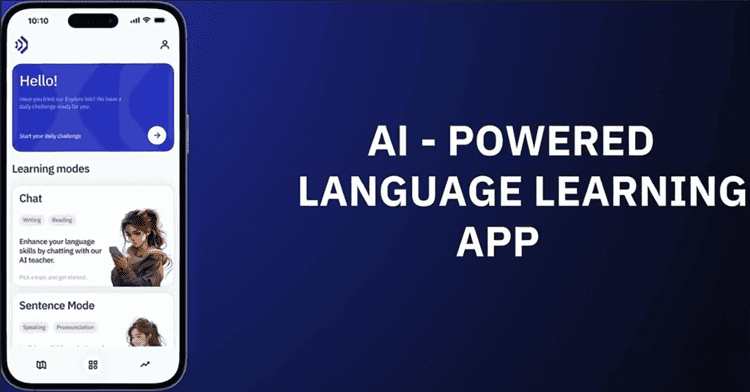
The chat-based design mimics native messaging apps, making casual learning feel natural.
Users can engage in real-time pronunciation assessment and roleplay gameplay while enjoying ad-free sessions.
It’s well-suited for learners craving interactive language immersion tools, especially those who learn better by doing rather than by theory.
Performance and Reliability
Conversation Accuracy
TalkPal’s use of a GPT-based model gives it richer, more human-like dialogue.
It often steers conversations in nuanced, context-aware directions.
Its pronunciation checker, which evaluates every audio reply, further enhances realism and engagement.
SpeakPal relies on a proprietary AI tutor model, which, while mapped against academic language standards, can feel less fluid in complex exchanges.
However, its responsiveness and real-time feedback in voice and text sessions make it quite robust for structured learning.
Offline Access and Stability
One area where SpeakPal shines is its offline readiness.
Learners can download materials and exercises. This is key for those with inconsistent internet or learning disabilities.
TalkPal doesn’t currently offer similar offline access, favoring a fully online immersion model.
From a reliability standpoint, both platforms offer consistent uptime.
SpeakPal’s downloadable PDFs ensure continuity in case of outages or bugs, which offers peace of mind to serious learners.
Pricing and Plans
SpeakPal Pricing
- Basic: Free (limited chat, ads)
- Monthly Premium: $9.80 promo (reg. $19.90)
- Annual Plan: $59.80 per year
TalkPal Pricing
- Basic Plan: Free (10-minute limit per day)
- 1-Month Premium: $14.99/month
- 24-Month Plan: $6.25/month ($149.76 total), includes 14-day free trial
TalkPal offers a generous free trial with every premium plan—no credit card required.
SpeakPal doesn’t offer a trial but allows limited interactions via its free tier.
Cost-conscious users seeking structured coursework may gravitate toward SpeakPal’s lower price point.
Pros and Cons
SpeakPal
Pros
- Robust structured courses
- Writing practice with 10K+ exercises
- Offline access via downloadable content
- Teen Mode for added safety
- Lower subscription cost
Cons
- Limited language selection (30 languages)
- Interface may feel rigid for advanced learners
TalkPal
Pros
- Supports 57+ languages
- Pronunciation correction and assessment
- Fun roleplay and debate modes
- Highly immersive learning format
- 14-day risk-free trial
Cons
- Limited offline functionality
- Slightly higher pricing
For more on this, you can explore budget-friendly language app alternatives that offer similar features to SpeakPal and TalkPal.
While we’ve compared features, pricing, and user experiences, some important questions remain:
How effective is the speaking practice?
Can real-world fluency actually be achieved?
And which platform gives you more for your money, especially if you’re watching your budget?
How Does AI-Powered Speaking Practice Differ in SpeakPal vs TalkPal?
While both platforms aim to help users speak confidently in a new language, the AI-powered speaking experience on SpeakPal and TalkPal differs in terms of depth, spontaneity, and feedback intensity.
SpeakPal: Reinforcing Accuracy Through Structured Practice
SpeakPal emphasizes speaking accuracy and repetition within its academic framework.
Users interact with AI tutors by engaging in guided speaking modules aligned with each course’s level.
These typically follow a “listen, repeat, apply” progression designed to reinforce vocabulary and syntax.
- Conversations with the AI are topic-based, covering common conversational themes like travel, business, and culture.
- SpeakPal includes intonation cues and vocabulary hints, providing gentle correction rather than dynamic back-and-forth dialogue.
- It supports both voice and typed input, allowing users to switch based on comfort level or learning goal.
For those who are just starting or prefer more predictable speaking practice, SpeakPal offers a calmer, low-stress environment conducive to building confidence before real-world conversations.
TalkPal: Simulated Conversations With Real-Time Feedback
In contrast, TalkPal delivers a real-time, adaptive speaking experience.
Its GPT-powered engine dynamically parses sentence structure, word choice, and tone, offering immediate pronunciation assessment and grammar correction during dialogic scenarios.
- Users can jump into 300+ immersive roleplays, where characters respond authentically, often deviating from a script, to mirror how native speakers might react.
- The AI assesses intonation, rhythm, and sentence complexity, making it ideal for intermediate to advanced learners aiming for fluency and fluidity.
- Feedback is detailed and specific, encouraging learners to self-correct and rephrase, which is a powerful way to achieve natural speech proficiency.
In essence, if you’re looking for academic-style speaking drills, SpeakPal keeps things structured and reliable.
If you want spontaneous, context-sensitive dialogue, TalkPal offers a more immersive vocal playground.
Can You Really Learn Conversational Fluency with SpeakPal or TalkPal?

This is one of the most important questions for any language learner: Can either app take you beyond flashcards and quizzes—into real, fluent speech?
SpeakPal: Gradual Mastery Through Reinforcement
With over 10,000 practice items, downloadable materials, and topic-based modules, SpeakPal builds fluency by repetition and contextual reinforcement.
While the conversations may be more structured than spontaneous, the step-by-step progression is ideal for learners looking to grow confident in grammar, vocabulary, and syntax before diving into open-ended dialogue.
- The platform’s curriculum includes gradual exposure to native sentence structure.
- It particularly focuses on daily expressions, business phrases, and academic writing, making it well-suited for written and oral proficiency exams.
- Progress is tracked via smart assessments that indicate when you're ready to advance conversationally.
While SpeakPal may not simulate the spontaneity of a street conversation in Rome, it lays solid grammatical and lexical groundwork so your spoken responses are clear, correct, and composed.
TalkPal: Fluency Through Adaptive Real-Time Interaction
TalkPal’s adaptive learning engine makes it a frontrunner for developing real conversational fluency.
By reactively responding to your speech, it mimics organic dialogue.
Think of it as having a near-native speaker at your disposal—one that corrects, guides, and responds in real time.
- Whether you're debating, ordering food, or networking professionally, TalkPal provides low-stakes simulations that train both comprehension and spontaneity.
- Its voice recognition feedback loop helps develop not just grammar, but also intonation and cadence, which are important for fluency.
If you're learning a language to converse naturally while traveling or working abroad, TalkPal mirrors those environments better and gets you talking with cognitive fluidity and cultural nuance more quickly.
Which Platform Offers Better Value for Budget-Conscious Learners?

Many users compare these two platforms not just on functionality but bang for the buck.
Here’s how budget-savvy learners can evaluate the value proposition of each.
SpeakPal: Lower Monthly Cost and Strong Free Tier
SpeakPal’s pricing appeals to learners seeking affordability with structure.
Its monthly plan ($9.80 promo) and annual subscription ($59.80) are cheaper than TalkPal’s tiers.
Even its free version, albeit limited, allows users to experience a variety of lessons, vocabulary tests, and early-stage exercises.
- Best suited for learners who enjoy long-term methodical study.
- Downloadable content makes it a low-data, one-time investment, ideal for offline learning or repeated review.
- Teens and educators benefit from its Teen Mode at no extra cost—an added value for families and schools.
TalkPal: More Features, Higher Price—But a Free Trial Bonus
TalkPal’s $14.99/month plan may seem high to cost-conscious learners, but the value comes in feature volume: 300+ roleplays, pronunciation scoring, and multi-language support (57+).
The clincher?
A 14-day free trial—no payment upfront—lets learners test drive it risk-free.
- Ideal for short-term or situational learners (like prepping for travel or interviews).
- The 24-month plan ($6.25/month) brings long-term savings—though it requires a bigger upfront commitment.
- Includes unlimited speech practice, a bonus for users aiming for intensive fluency exercises.
If you're on a tight budget, SpeakPal is the best-value long-term option.
If you want fast-track fluency without financial commitment upfront, TalkPal’s free trial and intensive format may yield a quicker ROI.
Use Cases

Who Should Choose SpeakPal?
- Parents who need child-safe language apps
- Academic learners who need structured progression
- Professionals preparing for written assessments
- Students who prefer PDF-based revision worksheets
Who Should Choose TalkPal?
- Globetrotting travelers or expats
- Business users needing real-world speech exposure
- Intermediate to advanced learners seeking fluency
- Multilingual learners studying less common languages
Unique Selling Points
SpeakPal’s biggest selling feature is its curriculum-driven approach with downloadable resources, which makes it a teacher-friendly tool for educational institutions or homeschooling.
It also places student safety upfront, thanks to Teen Mode.
TalkPal dazzles with immersive language scenarios and AI that can tailor feedback on intonation and grammar in real time.
Its roleplay system makes it one of the more engaging language platforms available today, especially for professionals and conversational learners.
Future Developments
SpeakPal is reportedly working on expanding its supported languages.
TalkPal’s roadmap includes expanding its scenario library to include gaming interactions and regional dialects, which will further enhance adaptive AI tutoring experiences.
Both platforms are keeping pace with the evolution of AI in EdTech, and that's promising news for any language learner.
Expert Opinion

As a reviewer who's spent considerable time exploring both platforms, I’d argue that the ideal choice depends more on your learning style than on features alone.
SpeakPal offers superior value for learners who prefer methodical progression.
It's an excellent tool for K-12 institutions, remote learners, and users who crave structure. This is especially true for parents or younger users, thanks to its safety-first design.
Conversely, TalkPal excels for casual learners, global professionals, and adventurous polyglots who benefit from recall-based, spontaneous interaction.
Features like pronunciation assessment tools and immersive storytelling make it the more “lively” app of the two.
If you're struggling to decide, try testing both side by side. Your reaction to their teaching styles will be immediate—and it’ll be the most important data point of all.
Head-to-Head Comparisons
| Feature | SpeakPal | TalkPal |
|---|---|---|
| Writing Practice | ✓✓✓ (10,000+ exercises) | ✓ (Light assignments) |
| Pronunciation Tools | ✓ (Basic) | ✓✓✓ (Advanced scoring) |
| Roleplay | ✓ (Limited scenarios) | ✓✓✓ (300+ experiences) |
| Free Trial | ✗ | ✓✓✓ (14 days, no payment) |
| Languages | 30 | 57+ |
| Offline Use | ✓✓✓ (Download support) | ✗ |
| Teen Safety | ✓✓✓ (Teen Mode) | ✗ |
Need more insight? Our future guide on choosing the right AI language tutor by learning goal could give you tailored recommendations.
SpeakPal
TalkPal AI
Conclusion and Verdict
In conclusion, both SpeakPal and TalkPal are excellent AI language learning platforms, each tailored toward a different learning philosophy.
Choose SpeakPal if you want structured language foundations, downloadable materials, and age-appropriate learning via Teen Mode—all at a competitive price.
Choose TalkPal if you crave dynamic, immersive, speech-heavy sessions that mimic real-life conversations and offer pronunciation perfection across a wider array of languages.
Still uncertain?
Test both using their free tiers.
Your speaking partner—be it structured or spontaneous—is just a few clicks away.