TalkPal vs Babbel: A Complete Language App Comparison
Language learning apps have revolutionized the way we pick up new languages, especially with AI integration fueling more personalized, flexible user experiences.
In a digital world where convenience and results are key, choosing between AI-powered platforms like TalkPal and curriculum-based options like Babbel can shape your learning journey entirely.
This detailed comparison of TalkPal vs Babbel will help you determine which offers better value and effectiveness.
TalkPal AI offers users over 57 languages, leveraging artificial intelligence to simulate natural conversations, while Babbel focuses on structured, lesson-based learning in approximately 14 languages.
Each platform has unique advantages, depending on your learning preference—be it spontaneity and AI interactivity or a clear path laid out by linguistic experts.
🔍 TalkPal vs Babbel – Which Language App Is Better?
TalkPal is best for casual learners seeking flexible, AI-powered conversation practice in 57+ languages, while Babbel suits structured learners aiming for grammatical accuracy and cultural depth in up to 14 languages.

TalkPal
AI-powered language learning with 57+ languages, unlimited conversational practice, real-time feedback, and roleplay scenarios for natural fluency.
Babbel
Research-backed language courses with speech recognition, cultural content, and proven results – 92% user improvement in just 2 months.
👉 Choose Babbel if you want structured lessons backed by academic research.
👉 Choose TalkPal for chatting your way to fluency, especially across multiple languages.
Key Differences:
- 🧠 TalkPal uses AI chat for immersive, real-time practice; Babbel offers expert-designed modules.
- 🌍 TalkPal supports more languages (57+); Babbel offers rich grammar and cultural insights.
- 💰 TalkPal has a 14-day free trial and competitive long-term pricing; Babbel includes a $239 lifetime option.
Read on for our detailed head-to-head breakdown of features, pricing, and best use cases.
Quick Feature Comparison
| Feature | TalkPal AI | Babbel |
|---|---|---|
| Learning Method | AI-powered conversations | Structured lessons by linguists |
| Languages Offered | 57+ | 13–14 |
| Best For | Conversation fluency, multi-language users | Grammar, cultural context, academic learning |
| Device Support | Mobile, desktop, web | Mobile, desktop, web |
| Price Range | Free–$14.99/month, $6.25/month (24 mo) | $7.45–$17.95/month, $239 lifetime |
| Speech Feedback | Yes | Yes |
Key Features Comparison
AI Conversations vs. Structured Curriculum
TalkPal's strength lies in its dynamic, chatbot-style interaction where users learn organically by chatting with realistic AI avatars.
These AI-driven dialogues allow learners to practice practical conversations in over 300 scenarios like ordering food, introducing themselves, or handling workplace interactions.
The AI gives instant corrections, pronunciation tips, and suggestions, all of which are essential for building fluency through immersion.
Babbel, on the other hand, follows a linguist-designed, module-focused curriculum intended to teach grammar, usage, and vocabulary in 15-minute lessons.
It lacks the flexibility of spontaneous conversation but excels in providing structured foundational skills.
The app also embeds cultural insights into lessons, which can be invaluable for learners looking to understand not just the language but its context and culture.
If you're curious about how TalkPal's AI technology works, check out our TalkPal AI explained post for a deeper dive into its mechanisms and advantages.
User Experience and Design
TalkPal’s Chat-Like Interface vs. Babbel’s Traditional Layout
TalkPal mimics messaging apps, giving learners a familiar, comfortable environment to interact with an AI tutor.
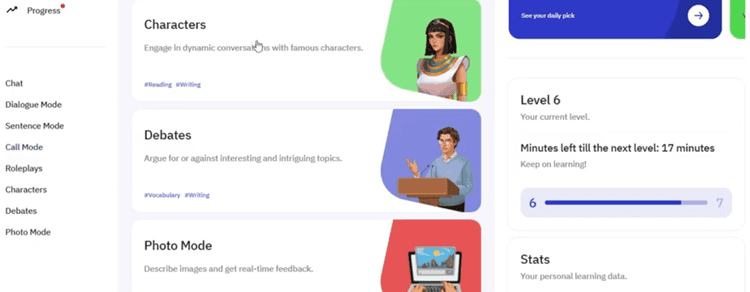
There’s minimal cognitive friction, making it easy for new users to start practicing within minutes.
The app learns from your interactions and tailors conversations accordingly, offering a high degree of personalization.
Conversely, Babbel uses a more traditional education format with clearly marked lessons, organized by difficulty and theme.
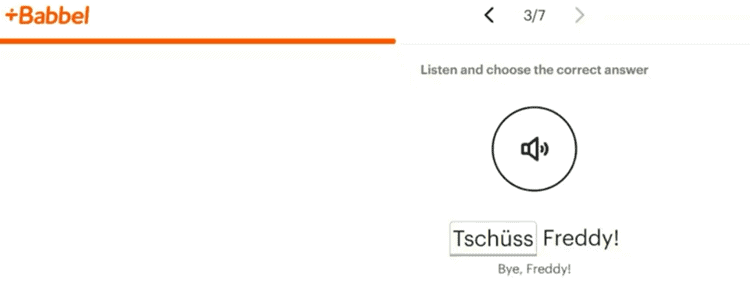
Its UI is intuitive and visually structured, which appeals to visual learners or those who prefer progressing through a syllabus.
This design distinction may influence your choice depending on how you absorb information.
If sleek, adaptive interfaces matter to you, we recommend exploring user-friendly language apps that blend intuitive interaction with personalized content.
Performance and Reliability
Speed, Consistency, and Technical Performance
TalkPal requires a stable internet connection because of its AI-driven backend.
While the app performs reliably, it's worth noting that heavy backend processing might occasionally result in slightly delayed responses.
However, its conversational system updates regularly, introducing new personality-driven chatbots and situational roleplays.
Babbel delivers a consistently fast experience, even offline, thanks to downloadable lessons. Their speech recognition engine is solid, though not perfect.
System crashes or bugs are rare, offering stable reliability across sessions.
While TalkPal is improving rapidly, Babbel offers a more polished and time-tested framework—especially important for users who expect consistent platform performance.
Pricing and Subscription Options
Both platforms offer competitive pricing but target different value propositions.
TalkPal AI has:
- A basic free plan with a 10-minute daily limit
- A $14.99/month unlimited Premium plan
- A 24-month discounted plan at $6.25/month
- A generous 14-day free trial without the need for upfront payment
Babbel offers:
- Plans ranging from $7.45/month to $17.95/month
- Separate pricing structures for single or all-language access
- A lifetime plan for $239
- Gift plans and corporate rates
- Trying the first lessons of every course for free.
For an in-depth discussion of Babbel’s plans and performance, explore our review of Babbel which evaluates subscription tiers in more detail.
Pros and Cons
TalkPal AI
Pros
- Wide variety of languages (57+)
- AI-powered, realistic conversation practice
- Custom scenarios and roleplaying
- High personalization and adaptability
Cons
- Less cultural content
Babbel
Pros
- Structured, academically-supported lessons
- High-quality grammar and vocabulary instruction
- Offline learning capabilities
- Cultural learning emphasis
Cons
- Fewer languages available
- Less emphasis on spontaneous conversation
- More rigid learning paths
This could make Babbel the better choice for academic or professional language training, while TalkPal shines in casual and flexible speaking practice.
Ideal Use Cases
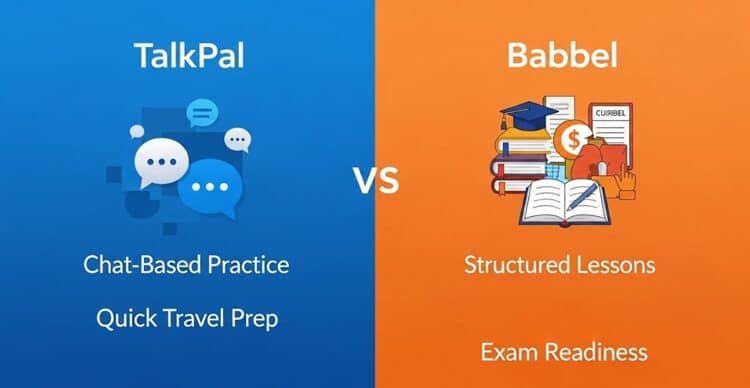
When to Use TalkPal
- You’re a tech-savvy learner who wants to chat your way into fluency.
- You’re traveling soon and want fast, contextual phrases.
- You’re maintaining language skills with real-time application.
- You’re pursuing multi-language learning strategies in one app.
When to Use Babbel
- You want structured, curriculum-style lessons with cultural insights.
- You are preparing for corporate or standardized exams.
- You value grammar and writing skills as much as speaking.
- You're pursuing academic language proficiency goals.
What Makes Each Platform Unique?
TalkPal distinguishes itself through its AI-driven, immersive interaction.
No two conversations are identical, and its learning adapts in real time, which mirrors human learning naturally.
It's especially ideal for users interested in AI-powered language learning experiences.
Babbel’s uniqueness lies in its credibility.
Backed by studies from Yale and Michigan State, it has concrete proof of learning efficacy. It's also great for users seeking cultural fluency alongside linguistic accuracy.
Support and Learning Resources
TalkPal offers email support, in-app chat for Premium users, and short guides within the interface.
Its FAQ section is sparse, which could be expanded as its user base grows.
Babbel, with its established infrastructure, offers multilingual email support, robust help centers, language blogs, and even podcasts.
Their resources extend far beyond the app, making it ideal for users looking for comprehensive educational support tools.
Roadmap and Future Enhancements
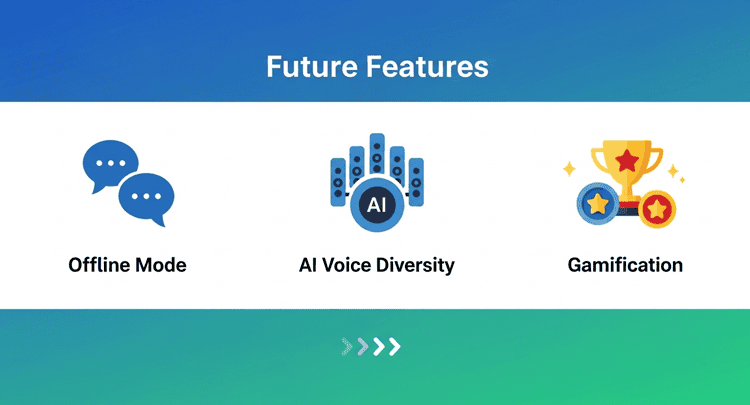
TalkPal has hinted at future features like offline conversation scenarios, more AI voice diversity, and gamification elements.
Babbel frequently updates content, adding new lessons and functional enhancements. Their roadmap includes more live class options and expanded professional/business modules.
If you're interested in where AI is taking language-learning, keep an eye on future trends in AI education platforms.
So how do you decide which app fits your lifestyle or learning style best?
Let’s break them down by user type.
Best Use Cases by Learner Type
Choosing between TalkPal and Babbel isn’t just about feature checklists—it’s about aligning each platform with your specific goals.
Here’s how they compare across real-world scenarios faced by different types of language learners.
Which Language App Is Best for Business Professionals: TalkPal or Babbel?
For professionals seeking to learn a new language for work, precision, fluency, and terminology relevant to business settings are essential.
Babbel caters well to this audience. Its content includes professionally oriented lessons and an expanding set of business-specific modules.
Combined with grammar and writing exercises, cultural etiquette tips, and progress tracking, Babbel delivers a polished curriculum for workplace readiness.
On the other hand, TalkPal appeals to professionals who already have some grounding in a language and wish to hone conversational fluency or simulate real-world scenarios.
Its AI roleplay scenarios include situations like leading a meeting, negotiating prices, and presenting ideas—ideal for practicing communication under business pressure, but less equipped for writing or grammar mastery.
Verdict:
If your job requires formal communication, client presentations, or email writing, Babbel's structured content offers the better path.
For improving spoken interaction or preparing for multinational team exchanges, TalkPal is a highly effective supplement.
Is TalkPal or Babbel Better for Travelers Wanting Quick, Practical Phrases?
When you're heading to a new country, you don't always need full fluency—you need to navigate, order food, and ask directions confidently.
This is where TalkPal excels.

Its AI chats simulate daily travel scenarios like airport check-ins, hotel check-ins, restaurant ordering, and emergency situations.
You can practice both asking and responding, with helpful corrections along the way.
And since its free tier allows basic use, it's also a great choice for cost-conscious globetrotters.
Babbel includes relevant travel vocabulary in its beginner lessons, but the pace is slower to build up to full conversations.
While it’ll certainly prepare you, it’s better suited to those planning for longer-term stays or looking to immerse themselves in local culture beyond survival phrases.
Verdict:
For last-minute or short-trip preparation, TalkPal’s situational fluency training offers more immediate practical value.
Use Babbel if you’re combining travel with long-term relocation or language immersion.
Is Babbel or TalkPal More Cost-Effective for Long-Term Use?
Budget-conscious learners want to know if paying for months—or even years—of subscriptions translates into sustained progress.
Babbel’s structured curriculum and lifetime options make it an excellent long-term investment, especially their $239 lifetime plan.
The content depth and certified studies on efficacy prove valuable for users wanting to build skills progressively over time.
TalkPal, on a 24-month plan ($6.25/month), is aggressively priced and far cheaper than many competitors when calculated over two years.
While it lacks Babbel’s academic validation, TalkPal stands out for users who want to dabble in multiple languages or keep their skills sharpened across several languages without multiple subscriptions.
Verdict:
Choose Babbel if you’re committed to mastering one language in depth. Choose TalkPal for affordable, ongoing fluency practice across multiple languages.
Does TalkPal's Free Version Offer Enough to Learn a Language?

TalkPal’s free version gives you a 10-minute daily limit—ideal for quick daily practice sessions, testing the app’s user experience, and getting a feel for its AI messaging system.
However, for meaningful progress—especially in areas like pronunciation feedback, roleplaying, and learning path customization—you’ll need to upgrade to Premium.
The good news?
You get a 14-day trial of full access, no upfront payment required.
Babbel’s also has some free lessons and offers access to a subset of its full curriculum.
Some learners report hitting a progress wall quickly unless they subscribe.
Verdict:
TalkPal’s free tier is a good non-committal entry point and lets you measure your engagement before paying.
But serious learners will eventually need to upgrade to see real development—just like with Babbel.
Can TalkPal’s AI Help You Learn Multiple Languages at Once?
Yes—this is where TalkPal truly shines.
Its 57+ supported languages and instant conversation switching make it a favorite among polyglots and those experimenting with multi-language learning strategies.
You can seamlessly move from practicing French greetings to checking your Spanish restaurant vocabulary—ideal for learners managing diverse language goals.
Babbel is better suited to dedicated learners focusing on one language at a time.
While it offers plans for all languages, its interface and structure likely aren’t optimized for bouncing between two or more languages simultaneously.
Verdict:
Go with TalkPal if you’re juggling multiple target languages. Choose Babbel if you’re all in on mastering one language to fluency before starting another.
Which Language App Has a Better Mobile Learning Experience?
Both TalkPal and Babbel are fully functional across mobile, tablet, and desktop, but the user interface style diverges significantly.
TalkPal’s chat interface mimics messaging apps, offering a more social, conversational feel that keeps interactions light and habitual.
If you’re glued to your phone, that’s a major plus.
Functionally, the app is fast, visual, and feels like chatting with a fluent friend in another language.
Babbel’s lessons feel more like mini-classrooms—with clear modules, interactive quizzes, and embedded grammar notes.
While the app is visually clean and user-friendly, navigating structured lessons requires a bit more engagement and planning.
Verdict:
TalkPal offers a more mobile-friendly experience for on-the-go learners. Babbel works best for those setting aside focused study sessions, even while mobile.
Which App Is Better for Visual and Auditory Learners?

Visual and auditory learners benefit from engaging interfaces, spoken content, and multi-modal learning.
Babbel and TalkPal both incorporate such elements—but with different emphases.
Babbel includes audio exercises, speech dictation, transcripts, and grammar illustrations, which appeal to visual and audio learners who prefer seeing a concept before applying it.
The visuals are informative but lean toward academic diagramming.
TalkPal thrives through real-time voice interaction, roleplay conversations, and AI-generated listening comprehension exercises—especially powerful for auditory learners working on intonation, pronunciation, and natural pacing.
Verdict:
Auditory learners may benefit more immediately from TalkPal’s immersive sound-based activities, while Babbel provides better structured visual reference materials for long-term retention.
Expert Opinion
In our experience, TalkPal is perfect for users who approach language learning like texting a friend.
It’s casual, fluid, and innovative.
However, its lack of structured grammar instruction may make it better as a companion tool rather than a standalone solution for academic learners.
Babbel, meanwhile, is the gold standard for curriculum-based digital language learning.
Its biggest advantage lies in its validated effectiveness—studies showing real skill gain in as few as 15 hours build strong trust.
The trade-off?
Less spontaneity and limited language options.
We suggest combining both apps for certain users—conversational fluency with TalkPal and foundational structure via Babbel.
Head-to-Head Comparisons
| Category | TalkPal AI | Babbel |
|---|---|---|
| Language Variety | 57+ | 13–14 |
| Conversation Feedback | AI-based, real-time | Basic speech recognition |
| Learning Methodology | Conversational/adaptive | Structured and linear |
| Cultural Context | Minimal | Strong |
| Value for Casual Learners | High | Medium |
| Value for Academic Users | Medium | High |
TalkPal
Babbel
Conclusion: Which One Should You Choose?
If you’re a spontaneous learner excited by AI-powered, flexible practice, TalkPal AI is likely your best match.
On the other hand, if you prefer structured, academically-backed learning for a single language at a time, Babbel is probably the way to go.
Ultimately, the best choice depends on your learning goals, schedule, and preferred method of engagement.
We recommend starting with each platform’s free trial to see which aligns better with your style.